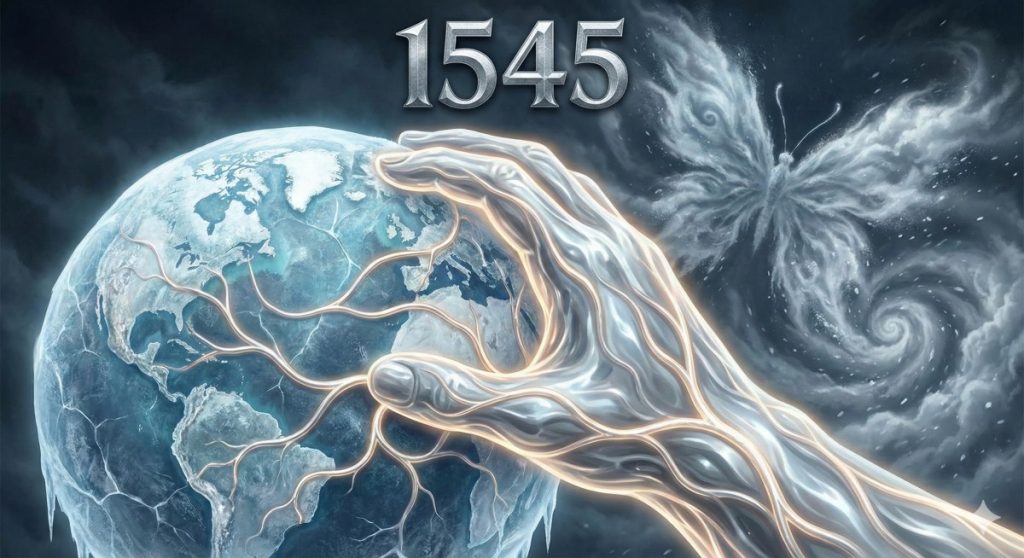
If we could look down upon the Earth in the mid-16th century, we would see a world being strangled by an invisible hand.
Welcome to 1545 Global Transformation.
In 1540, Western Europe suffered a drought of the century, with rivers drying up and forests spontaneously combusting; by 1545, however, many regions turned abnormally cold. Summer ceased to feel like summer, and crops lingered between life and death.
- In China, the Henan and Shandong regions saw miles of scorched earth. Harvests failed, prices skyrocketed, and refugees were left wandering the land.
- In the English Channel, the cold, damp weather became a breeding ground for plague. A terrifying outbreak of typhus forced the French fleet into a panicked retreat.
- In Catholic Europe, faced with inexplicable famine, pestilence, and death, the public fell into a collective hysteria. They turned their fury toward imaginary demons, causing the “witch hunts” to reach a fever pitch.
- In the Andes, the brutal climate made the already barren highlands even less productive, yet it led to the accidental discovery of the “Rich Mountain”.
The climate “butterfly” flapped its wings, triggering a series of global storms.
Catalogue
- The Americas’ 1545 Global Transformation: The Silver “Gates of Hell”
- The Europe’s 1545 Global Transformation: Brutal Naval Battles and Religious Fire
- The Asia’s 1545 Global Transformation: Shocking Night Raids and Shadow Empires
- The Terrifying Scientific Seeds of the 1545 Global Transformation
- Conclusion: A World Irrevocably Tied Together
The Americas’ 1545 Global Transformation: The Silver “Gates of Hell”
In April 1545, high in the Andes at 15,700 feet, the wind whipped snow like a knife against the skin. An Indigenous man named Diego Gualpa was searching for his lost llamas when he tripped and fell into a shallow pit. Cursing as he pushed himself up, his hand brushed against a heavy stone. In the dim light, he saw a strange, metallic, greyish-white luster. He brought the rock back to his camp on a whim.
When Spanish colonials saw the stone and cracked it open with a hammer, a cry went up: “My God…”. The interior revealed a vein of nearly pure, silver-white metal.
The news spread like wildfire across the Andean plateau, leaped over the Atlantic, and drifted into the halls of Charles V. Overnight, Potosí—a place whose very name breathed desolation—became the hottest “Rich Mountain” on Earth. Thousands of colonials, adventurers, and desperados flooded in, driving the Indigenous population into the “Gates of Hell”.
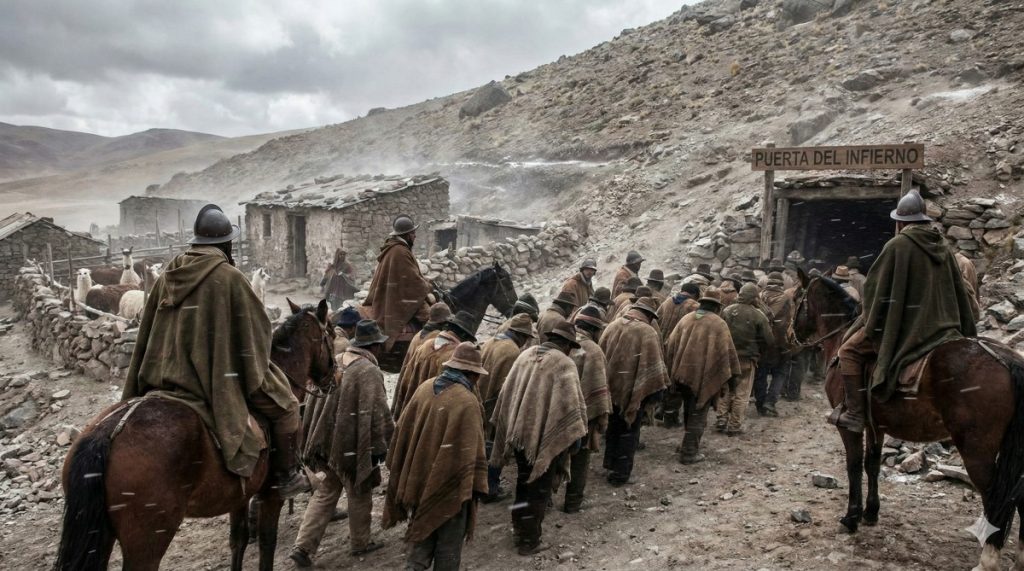
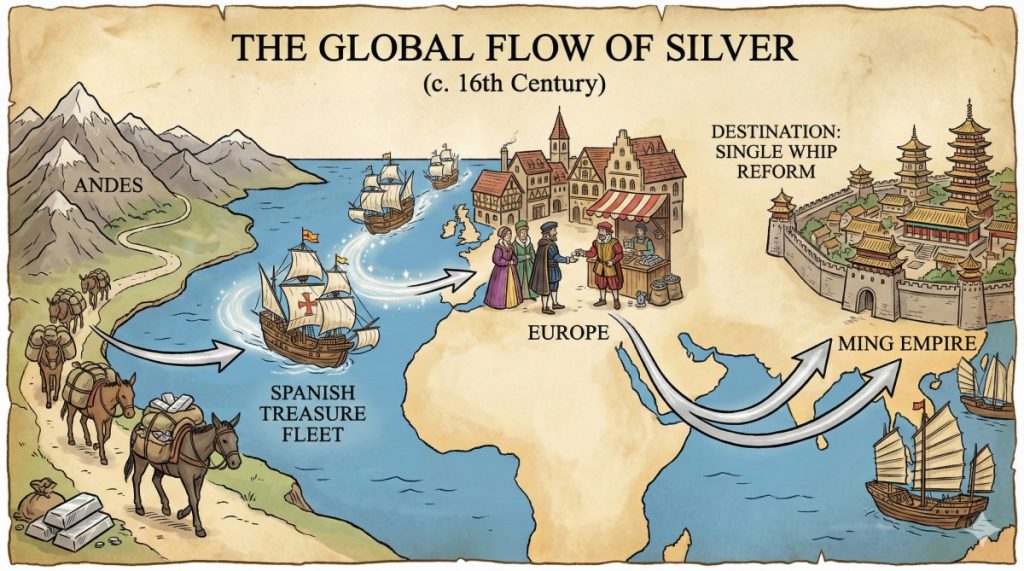
But above the mines, the silver flowed like a spring. It was minted into coins, loaded onto mule trains, hauled over the Andes, and shipped across the Atlantic in “treasure fleets” to fuel Charles V’s wars against France, the Ottomans, and Protestant princes.
This silver flooded the markets. It stripped the value from the savings of old-world landlords but sent prices soaring, allowing savvy merchants to fill their pockets. Finally, the silver sailed to the Far East, flowing into the veins of the Ming Empire.
While it brought silk, tea, and porcelain to European aristocrats, it also enabled the “Single Whip Law”, effectively buying the Ming Dynasty more time on the historical stage.
The Europe’s 1545 Global Transformation: Brutal Naval Battles and Religious Fire
By 1545, the Holy Roman Empire and the Papacy were in a state of crisis, feeling the sting of an existential threat for the first time.
Internally, princes in Northern Germany and Scandinavia were in open revolt. King Henry VIII had “set up his own franchise” away from Rome. King Francis I of France was flirting with the Ottomans, and Calvin’s brand of Protestantism was spreading like a plague out of Geneva. Externally, the Ottoman Empire had seized Hungary and Nice, dominating the Mediterranean and threatening Vienna.
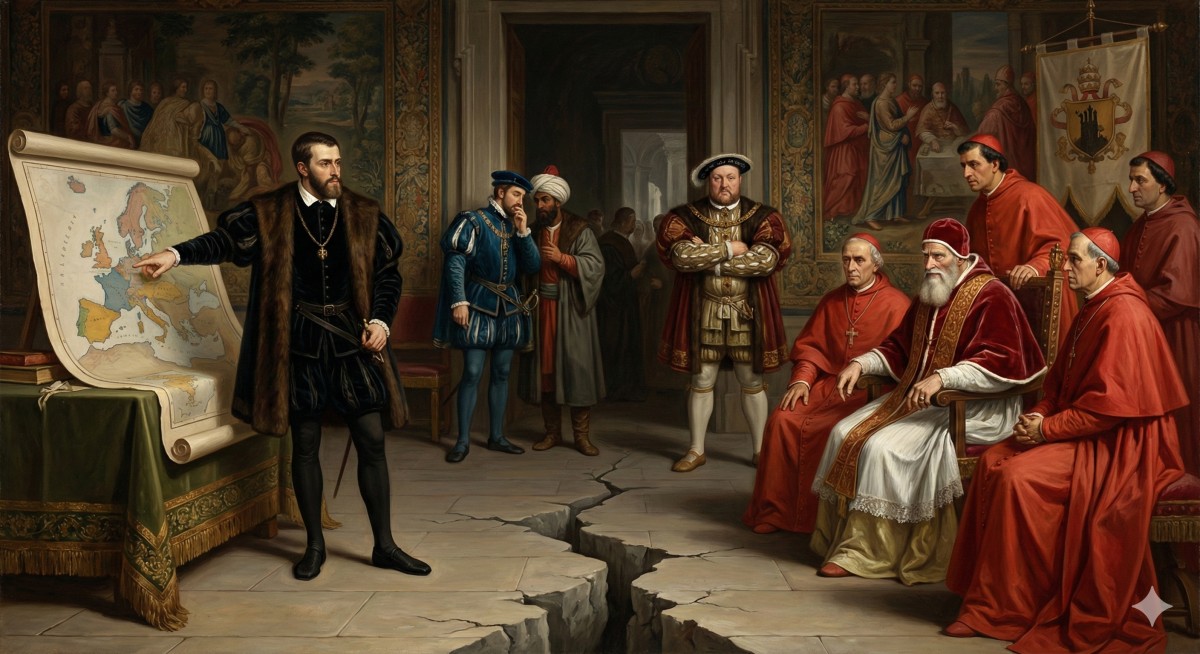
While Emperor Charles V hoped for a reconciliation between the Church and the Protestant princes to unite against the Turks, the Papacy had other plans. Pope Paul III established the Roman Inquisition to crack down on heresy and secretly supported France out of spite for Charles V’s alliance with the “heretic” Henry VIII.
In July 1545, the English Channel was blanketed by dark clouds. King Francis I led a massive invasion force of 235 warships and 30,000 men toward the Isle of Wight and Portsmouth. It was a fleet that blotted out the sky, larger even than the famous Spanish Armada that would come forty years later. King Henry VIII, iron-faced and portly, watched from the shore; his navy consisted of barely 80 ships.
On July 19, the battle began at the Solent. Henry’s flagship, the Mary Rose, had recently been refitted with heavy cannons. As she turned to fire her second broadside, a sudden gust of wind tilted the ship. Crucially, the lower gun ports—mere inches above the water—had been left open. The sea rushed in like a beast. In minutes, the giant vessel sank, taking nearly 400 men to the bottom.
Though morale crumbled, a typhus outbreak among the French fleet saved the English. Between the cramped, filthy conditions of the ships and the fierce resistance of local militias on the Isle of Wight, Francis I was forced into a humiliated retreat by July 28. This near-miss prompted Henry VIII to launch a massive naval buildup, transforming the English Navy from a collection of private vessels into a professional “national defense”.
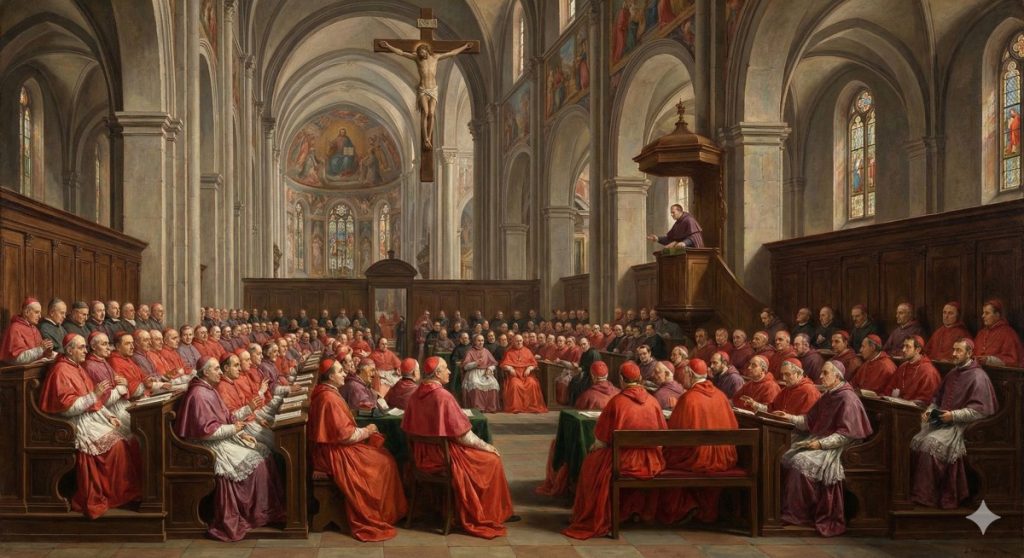
As the cannons cooled, the Council of Trent opened on December 13, 1545. The Church refused to compromise on theology but acknowledged its internal rot. It banned corruption among bishops and mandated the creation of seminaries to revitalize the priesthood. This “Counter-Reformation” gave the Catholic Church the organizational teeth to compete with Protestantism, while the Jesuits used the new theological framework to spread their influence across the Americas and Asia.
The Asia’s 1545 Global Transformation: Shocking Night Raids and Shadow Empires
As religious fires burned in Europe, Asia was dealing with its own fractures.
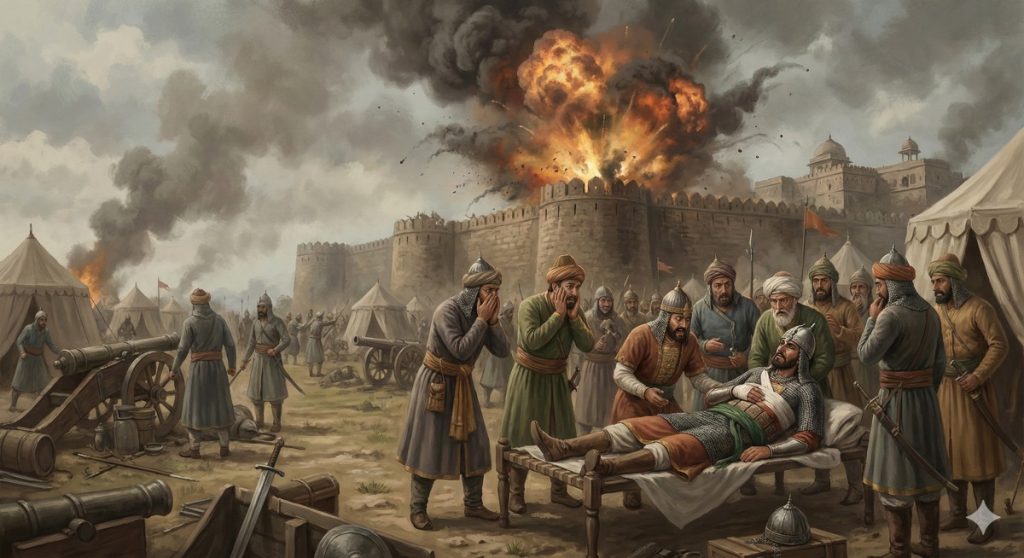
In May 1545, the siege of Kalinjar Fort in India reached its climax. The Afghan warlord Sher Shah Suri—the man who had routed Humayun five years earlier—was on the verge of victory when a gunpowder explosion accidentally claimed his life.
Though he ruled for only five years, his legacy was immense: he unified the currency with the silver Rupee, standardized weights and measures, and built the Grand Trunk Road to connect India. His death left a power vacuum that his successors couldn’t fill.
Meanwhile, the exiled Humayun, backed by the Persian Safavid Dynasty, stormed back into Afghanistan in November 1545, reclaiming Kabul and reuniting with his three-year-old son, Akbar.
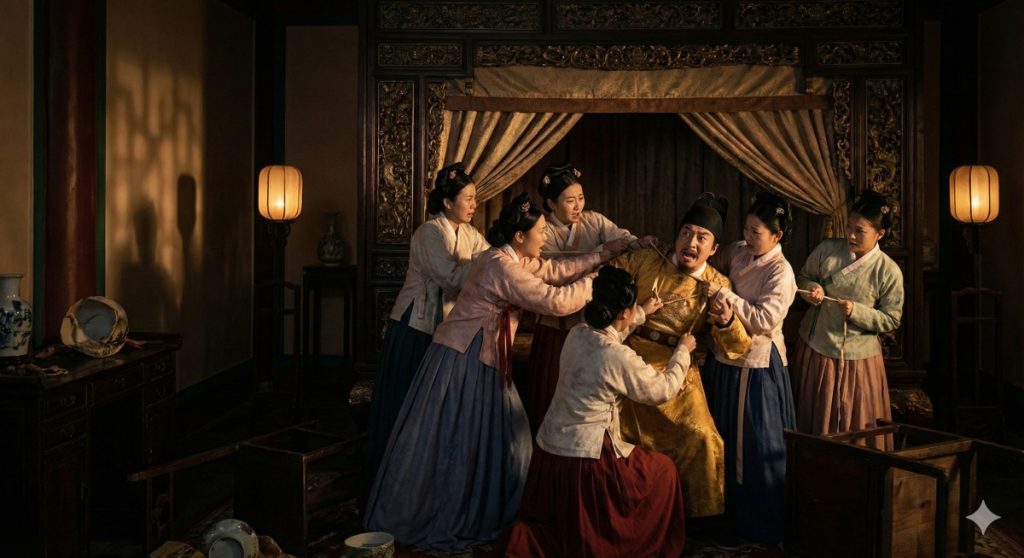
In China, the Ming Empire drifted under the “Taoist shut-in” rule of the Jiajing Emperor.
But Altan Khan was doing more than raiding; he was building a “Shadow Empire” in the steppes. He attracted Han Chinese farmers and craftsmen to build houses and temples, transitioning his people toward a mixed agricultural-nomadic economy. The Ming frontier was as precarious as a stack of eggs.
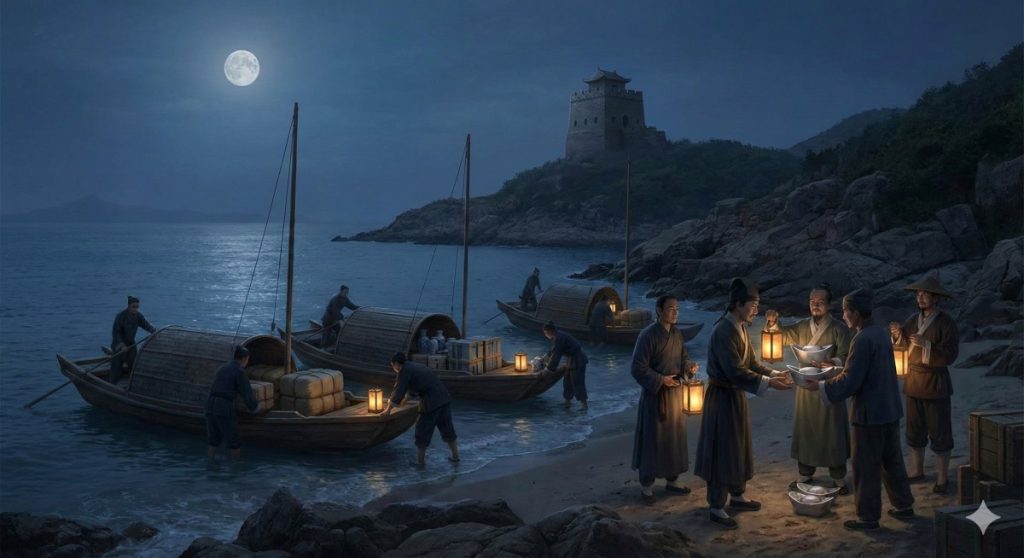
At the same time, along the southeastern coast, with the intensification of the sea – ban policy, smuggling trade along the coasts of Fujian and Zhejiang provinces became as rampant as a wildfire out of control. In just a few years, it would escalate into a serious “Japanese pirate chaos“(WoKou), which was like a ticking time – bomb that finally exploded, causing great turmoil in the region.
In Japan, the Battle of Kawagoe changed the fate of the Kanto region. The Hojo clan, led by Hojo Ujiyasu, faced a massive coalition of 80,000 men with only 8,000 of his own. In a daring night raid, Hojo’s “light-armored suicide squad” sliced through the coalition’s camp like a hot knife through butter. The victory secured Hojo dominance over Kanto for the next century.
The Terrifying Scientific Seeds of the 1545 Global Transformation
Turning our gaze away from Eurasia toward more distant continents, we find the Songhai Empire at its zenith in West Africa.
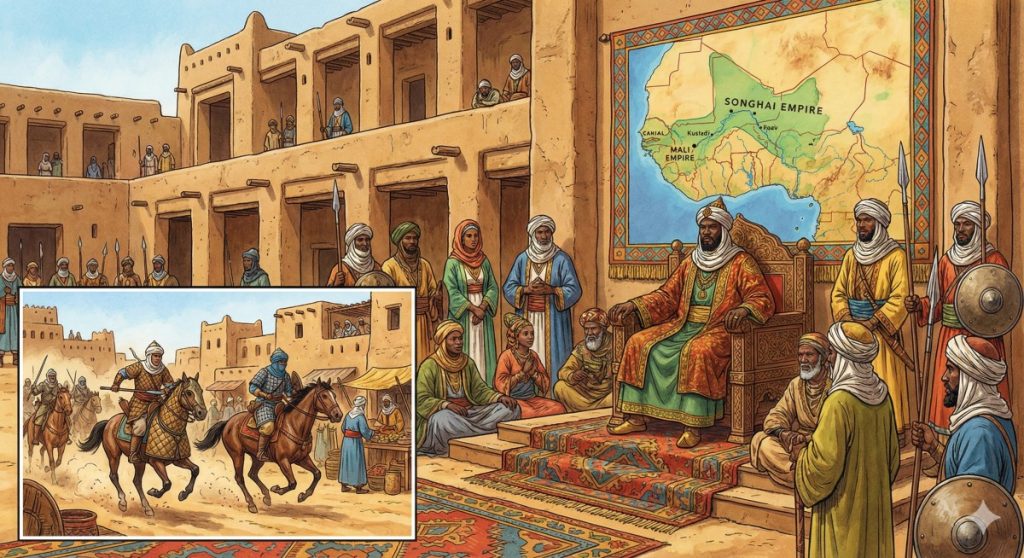
King Askia Ishaq I was a formidable force; this year, he led his armies into the capital of the former hegemon, the Mali Empire. Mali’s era as the dominant power of West Africa came to a definitive end, leaving Songhai as the undisputed supreme authority of the Sahel region.
However, the struggle for ownership of the Taghaza salt mines between Songhai and the Saadi Dynasty of Morocco to the north reached a fever pitch. Ishaq I dispatched 2,000 elite cavalry to raid trade towns within Moroccan territory.
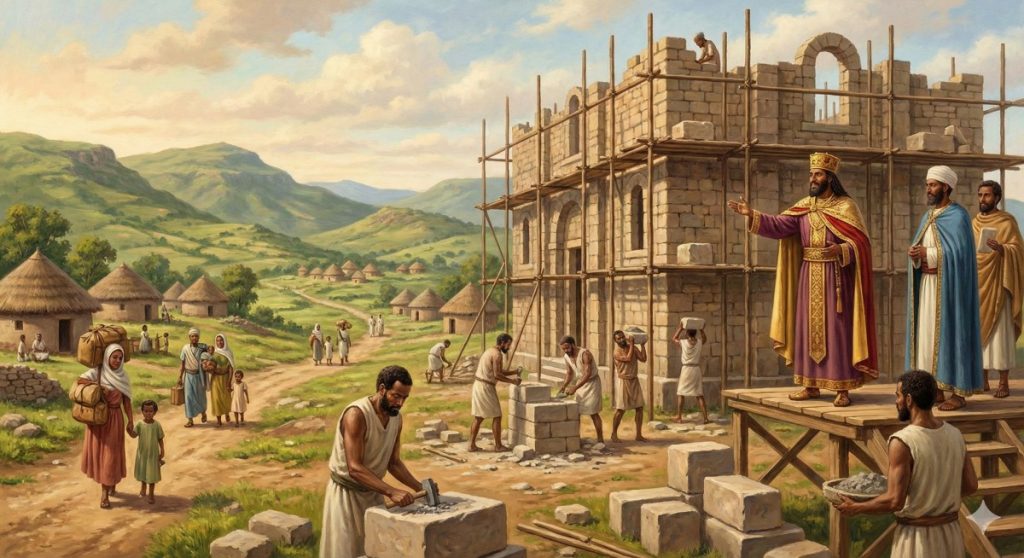
In East Africa, Emperor Galawdewos of Ethiopia took advantage of the power vacuum following the death of Imam Ahmad of the Adal Sultanate. He began reclaiming lost territories piece by piece, rebuilding churches, and unifying his people. This ancient Christian kingdom exhibited remarkable resilience.
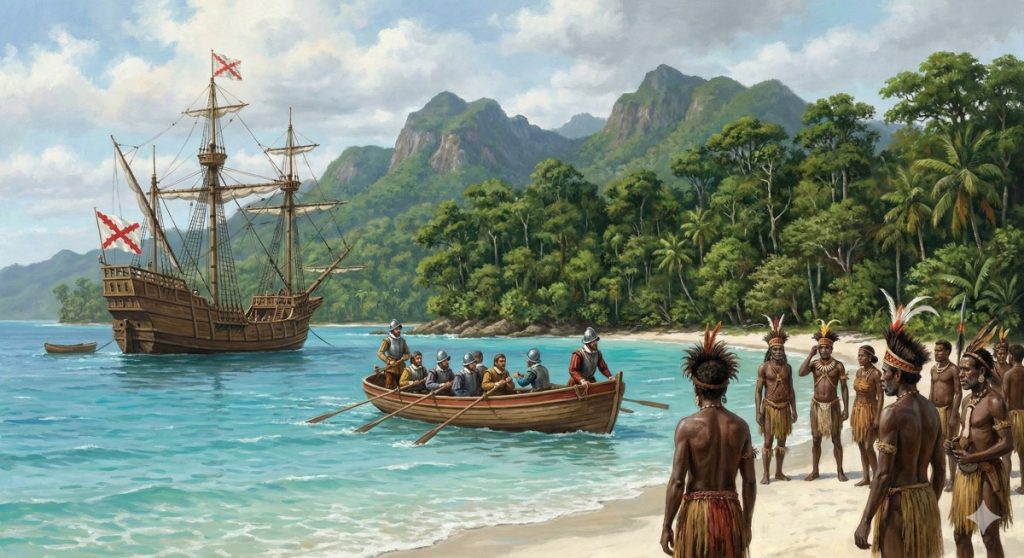
That same year, amidst the vast waves of the South Pacific, Spanish navigator Iñigo Ortíz de Retes was sailing from the Maluku Islands toward the Americas when he landed on a massive island. Observing that the locals’ skin tone resembled that of the Guinea blacks he had seen in West Africa, he officially named the island “New Guinea“.
Meanwhile, the human intellect was not sitting idly by.
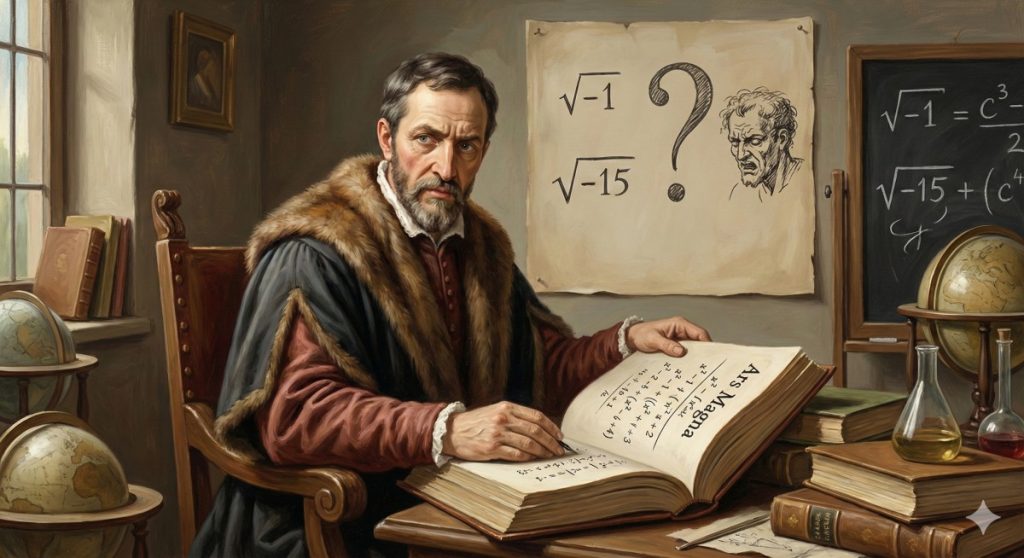
In Milan, Italy, a temperamental mathematician named Gerolamo Cardano published a book titled Ars Magna (The Great Art). This work systematically explained how to solve cubic and quartic equations. Even more revolutionary was his first brush with the concept of square roots of negative numbers during the solution process. This exploration, which he described as ‘mental torture,’ planted the seeds for the revolutions in physics and engineering that would follow centuries later.
In Padua, Italy, the world’s first university botanical garden broke ground. Its design was rich with symbolism: a circle representing the world, a square in the center representing the ocean, and four gates facing the four known continents.
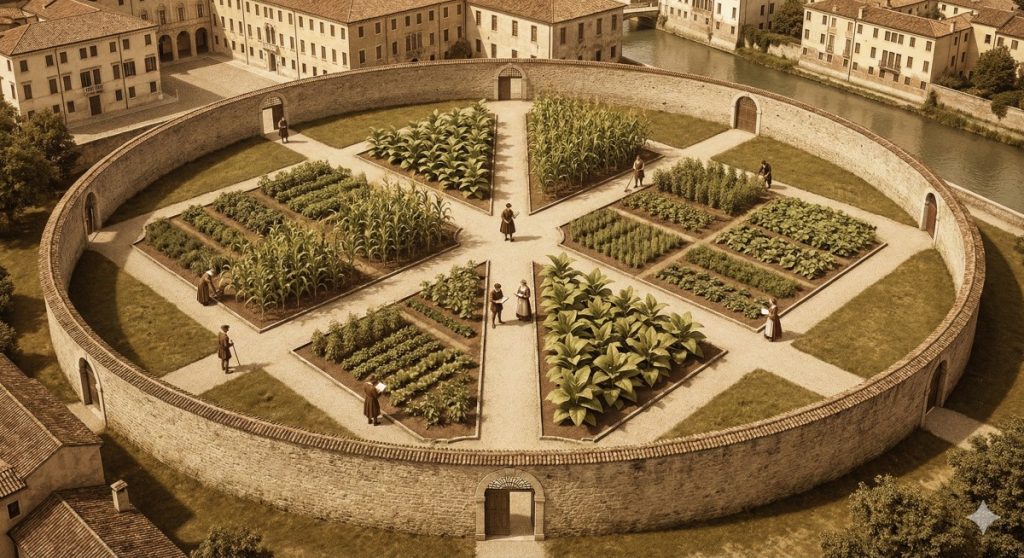
Here, corn and tobacco from the Americas, spices from India, and exotic flora from Africa lived together. Scientists conducted research here, marking the early bud of modern plant taxonomy and pharmacology.
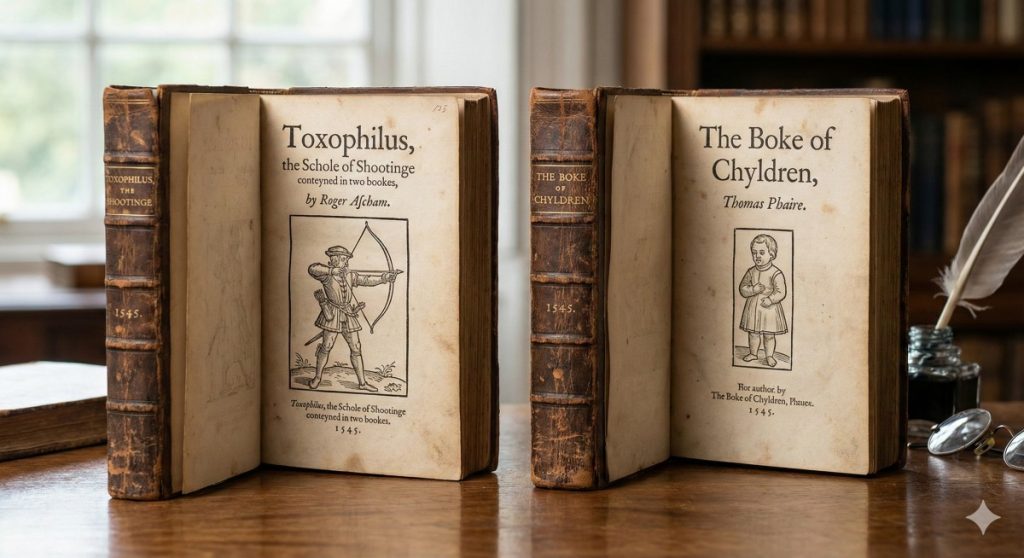
In England, two extremely important popular science books written in English were published this year: Toxophilus, a treatise on physical and military training by Roger Ascham, and The Boke of Chyldren, a pediatric work by Thomas Phaire. This signaled that authors were beginning to write in ‘plain, everyday language’ that the common people could understand. Waves of intellectual liberation were beginning to surge from these seemingly minor details.
Conclusion: A World Irrevocably Tied Together
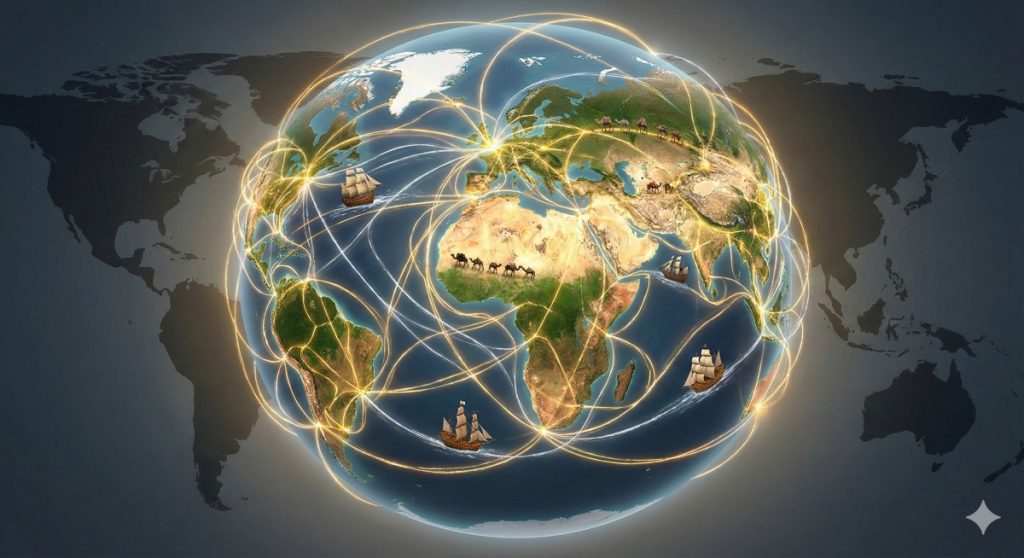
The year 1545 shows us that the world had truly become interconnected. From the silver mines of the Andes to the sinking ships of the English Channel, from the Taoist elixirs in China to the night raids in Japan, every event was a thread in a single global tapestry. Humanity had reached a point of no return: The era of isolated development was over.