Turning Point of Global History
History often descends like a silent snowfall, with each event drifting down noiselessly. But as we look back from the mountaintop of the present, 1530 stands out as the moment the weight of those flakes finally broke the back of the old world. Welcome to WongTalk, where we explore the Global History of 1530—a year that serves as a jagged crack in the timeline of civilization.
Through this fracture, the fading light of the medieval era leaked out, and the raw, unyielding light of the modern age began to seep in. It was a year of brutal chaos:
- A Pope and an Emperor put on a forced, painted smile in Bologna while their hearts harbored the bitterness of a sacked Rome.
- A massive storm surge swallowed 100,000 lives in the Netherlands, reminding humanity of nature’s cold indifference.
- The Inca Empire unknowingly hurtled toward a collision with 180 desperados sailing from the horizon.
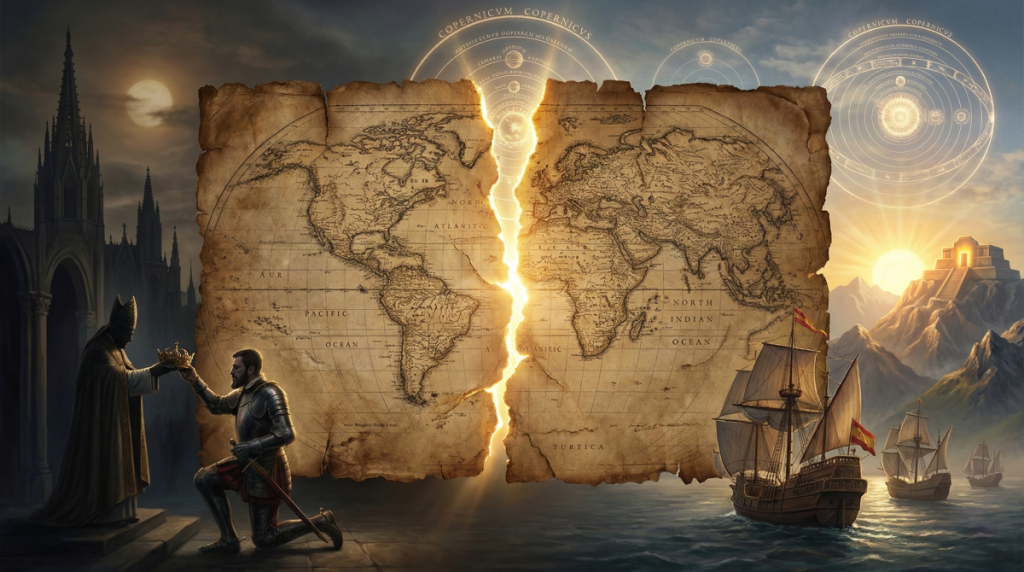
Yet, amidst this turmoil, a miraculous turning point of global history was quietly taking root. In a lonely room in Poland, Copernicus was finishing the manuscript that would move the Earth itself. From the religious schisms of Europe to the ritual shifts of the Ming Dynasty, 1530 was the moment the world turned a corner.
Join us at WongTalk as we dissect the disintegration and rebirth of a world in transition.
Catalogue
- Europe: The Fractured Icon – Religious Schism and the End of Medieval Order
- The Americas: Conquest and Fate – The Fall of the Inca and the Rise of Colonies
- Asia: Imperial Transitions – New Eras in the Ming and Mughal Empires
- Epilogue: 1530 as a Global Pivot – The Twilight of Tradition and the Birth of Modernity
Europe: The Fractured Icon – Religious Schism and the End of Medieval Order
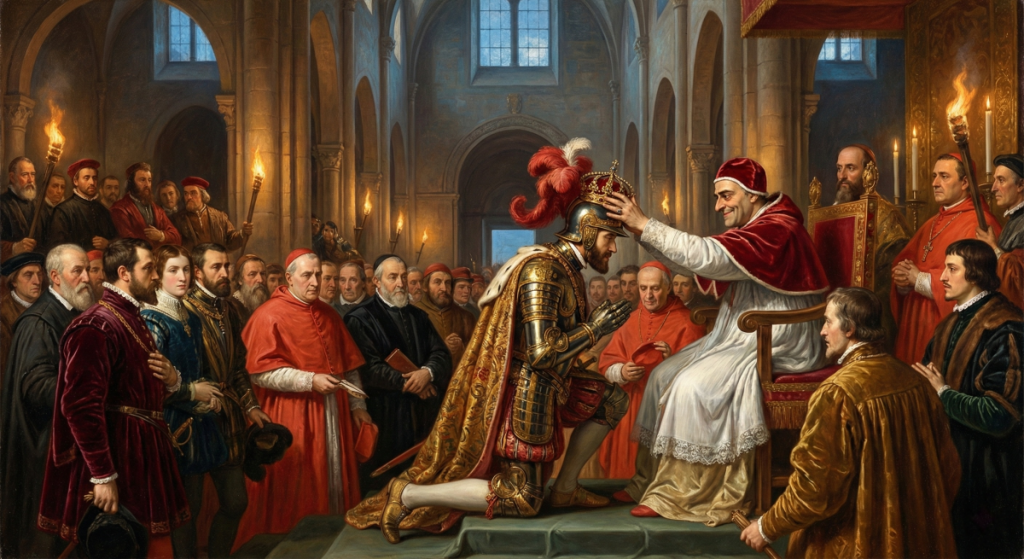
In the biting cold of February 24, 1530, the San Petronio Basilica in Bologna was stiflingly hot, filled with the sweat and tension of a dying era. Charles V, the most powerful man in Christendom, knelt before Pope Clement VII to receive his crown. To the uninitiated, it was a display of divine unity; to those in the know, it was a charade between two rivals who, just three years prior, had been at each other’s throats during the brutal Sack of Rome.
Key Contents
The Painted Smile: The Pope’s stiff, forced smile masked the humiliation of having been nearly starved to death by Charles’s mercenaries.
The Final Curtain: This was the last time in history a Pope would personally crown a Holy Roman Emperor.
The Great Schism: On June 25, the Augsburg Confession was submitted, only to be rejected by Catholic theologians with a blunt “no way”. By the following year, the Schmalkaldic League was formed, turning a religious crack into a permanent chasm across Europe.
Three years ago, the German mercenaries under Charles sacked Rome. This wasn’t your run-of-the-mill looting. They emptied the churches of their golden religious vessels. The Pope was forced to take refuge in the Castel Sant’Angelo and nearly starved to death.
The aftermath of this “Sack of Rome” is that the city still hasn’t recovered. The residents of Rome are so mad at Charles V that they’d love to tear him limb from limb. That’s why the coronation ceremony was held at the San Petronio Basilica in Bologna. After all, Charles V himself was scared stiff!
The coronation ceremony was extremely lavish, and the parade that followed was even more magnificent. Charles V tossed gold coins to the crowd and directly knighted several nobles from Bologna. The Pope had a smile on his face that looked as if it were painted on, a stiff and forced one. Standing together, they were like a pair of partners who were forced to put on a show.
Sure enough, this coronation turned out to be the last time a Pope personally presided over the coronation of a Holy Roman Emperor in history. The medieval fairy-tale concept of “the Pope rules the soul, and the Emperor rules the body” officially came to an end on this day. It was as if the stage had been torn down before the audience had even left.
Right after the coronation, Charles V made a beeline for Augsburg in Germany. He was really up against it. On one hand, there was the military threat from the Ottoman Turks, and on the other, the religious disaffection of the Lutheran princes.
So, he had no choice but to get the Protestants and Catholics together for a meeting. He was hoping they could all have a meal together, then get really drunk, patch things up, and join forces to fight those darn Ottomans.
But on June 25th, Protestant princes like John, the Elector of Saxony, submitted the Confessio Augustana.
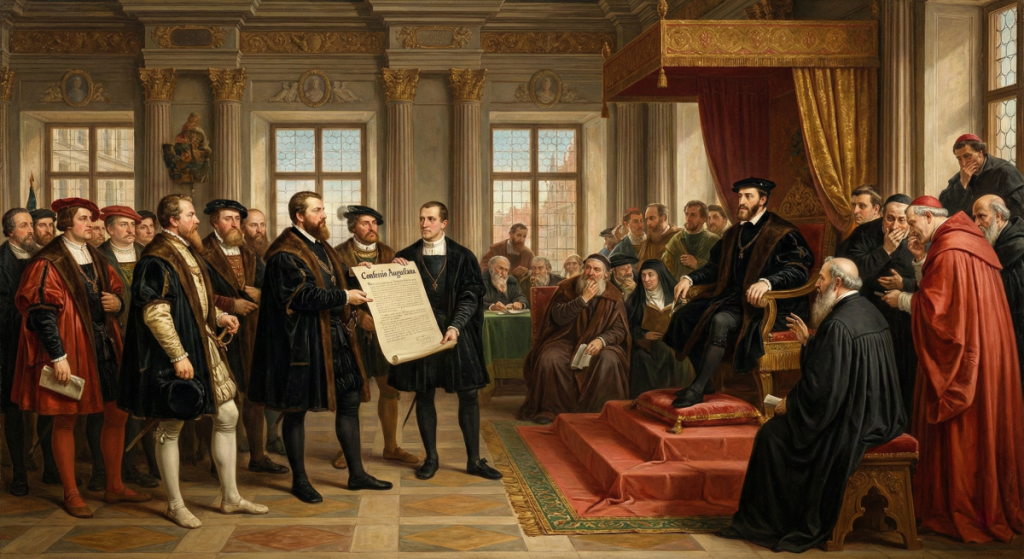
The drafter of this document, Philipp Melanchthon, was an educated man, and he wrote it in a very polite way. The first 21 articles stated: “We Lutherans are actually quite traditional and haven’t gone off the rails.” The following 7 articles tactfully put forward some suggestions, like whether clergy could get married and if monasteries were too wasteful.
However, the Catholic theologians around Charles went ballistic immediately. They not only wrote ” Confutatio Pontificia” but also directly announced the ” Recess” on November 19th, comprehensively rejecting the Confessio Augustana. To put it bluntly, it boiled down to one sentence: “No way. All of you, come back with my money.”
This really rubbed the Protestant princes the wrong way. They thought they’d been more than gentle, not even bringing up issues with the Pope, yet this was how they were being treated! In a fit of anger, the next year, they formed the Schmalkaldic League. The message was crystal clear: bring it on. From then on, Europe was split in two on the religious map, and the crack widened into a chasm.
Charles V already had a mountain of problems on his plate, and then a new disaster was like adding fuel to the fire. The severe flood came along, almost emptied his coffers.
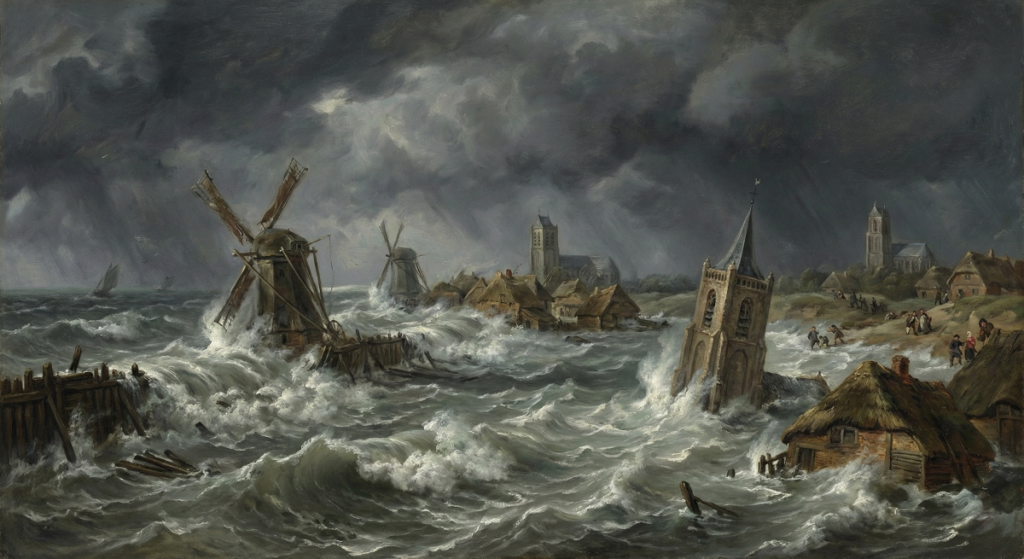
On November 5, 1530, in the Netherlands, a storm surge struck without warning.
The surging seawater instantly swallowed up Zeeland and Flanders. The once-prosperous Reimerswaal and the surrounding villages sank to the bottom of the sea forever, altering the terrain of the Scheldt estuary. Salt pans, villages, and lives all vanished overnight.
This massive flood, which claimed over 100,000 lives, served as a reminder to humanity:
You guys keep doing your thing, but Mother Nature plays by her own rules.
At the same time, Thomas Wolsey, the Cardinal of England, was on the last leg of his life.
This Cardinal had once held immense power throughout the country and was known as “the other king”. However, he bungled one thing: he failed to obtain permission from the Pope for King Henry VIII to divorce Queen Catherine.
This incident not only made him fall out of favor but also landed him in prison. On November 29, 1530, he died of illness at Leicester Abbey. His deathbed became a footnote to the era when secular power reigned supreme over religious power.
After his death, Henry VIII received a “Collectanea Satis Copiosa” submitted by radicals such as Thomas Cromwell and Thomas Cranmer. To compile this magnum opus, radical scholars rummaged through ancient books.
They aimed to prove one thing: the King of England had never been under the jurisdiction of Rome, and the King of England held absolute Imperium and the position of spiritual leader within the country.
A divorce case was somehow escalated into a national sovereignty revolution. Wolsey’s death was like putting a period at the end of the old era.
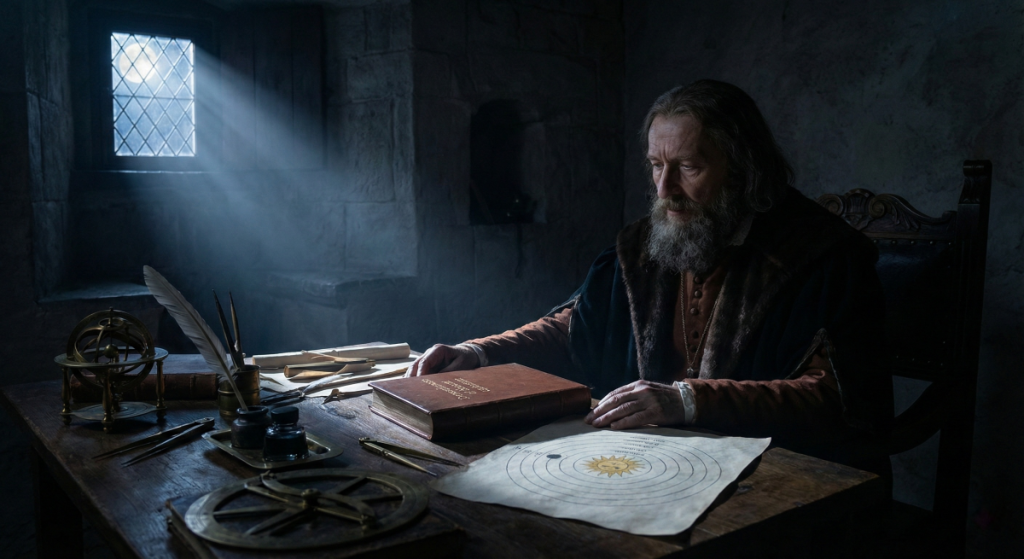
It was also in this year that Nicolaus Copernicus quietly completed the first draft of “De revolutionibus orbium coelestium”(On the Revolutions of the Heavenly Spheres) in Frombork, Poland. Behind the heavy curtain of scholastic philosophy, a new worldview was stirring, a scientific revolution was beginning to take root, marking the rough first stroke of a new era.
The Americas: Conquest and Fate – The Fall of the Inca and the Rise of Colonies
While Europe wrestled with its soul, the American continent stood at a crossroads of destiny. In the Andes, the Inca Empire was tearing itself apart in a tragic civil war between brothers Atahualpa and Huascar. Atahualpa stood triumphant atop the mountains, blind to the fact that his empire was riddled with holes and his people were deserting.
Key Contents
The Desperados: On December 27, 1530, Francisco Pizarro set sail from Panama with just 180 men and 37 horses. To many, they looked like small-time crooks, yet the fate of an empire of millions rested in the hands of these desperados.
The Portuguese Footprint: To the east, King João III of Portugal sent a fleet to Brazil with a clear mission: drive out the French and plant a permanent flag. This mission led to the founding of São Vicente, ensuring that a new patch of the Americas would forever speak Portuguese.
For the Inca Empire, this year, the tragic family saga left behind after the death of Huayna Capac reached its crescendo, much like a gripping soap opera hitting its most intense moment.
Atahualpa, the younger brother hailing from Quito, with the assistance of battle-hardened generals. It was like a well-oiled military machine steamrolling over its rival, gained a crushing advantage over his brother Huascar, who also claimed legal inheritance rights.
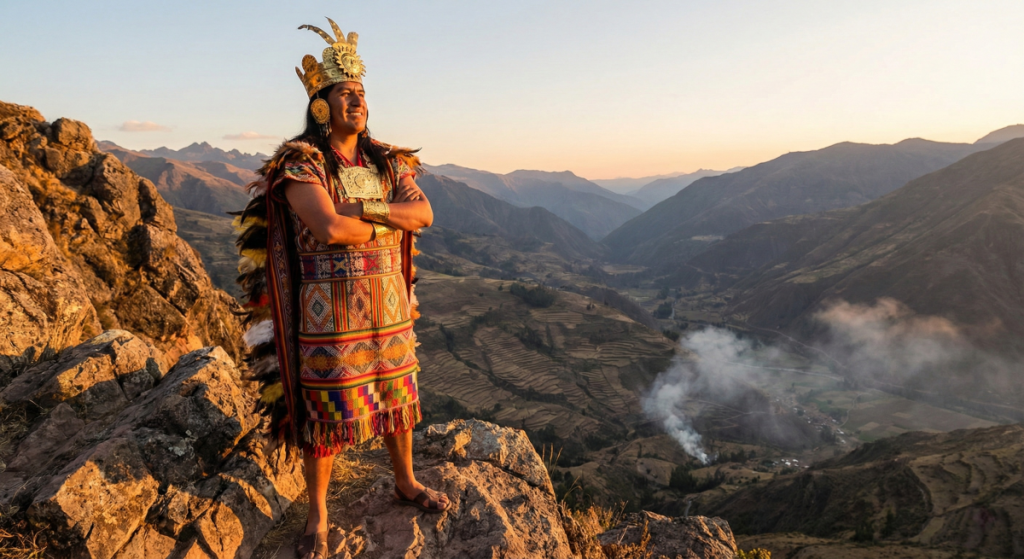
“The odds are in my favor!” Atahualpa stood on the peak of the Andes, swelling with pride as he anticipated donning the sole crown.
He turned a blind eye to the hundreds of thousands of deaths resulting from this civil strife. Nor could he see that the once-mighty empire was now riddled with holes, its people deserting and its allies turning against it. What he was completely unaware of was that several small sailing ships had emerged on the horizon.
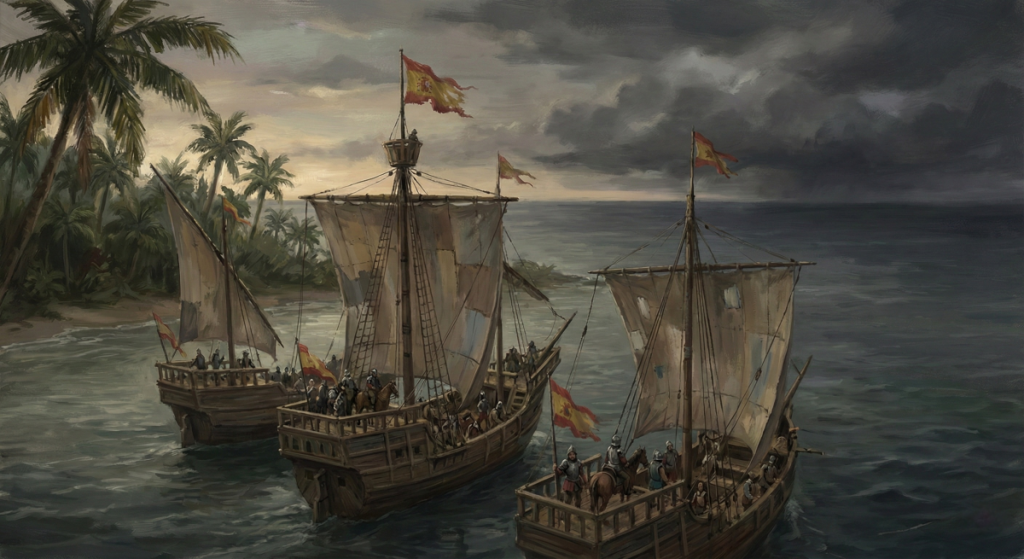
The commander of the flagship of this fleet was Francisco Pizarro from Spain. At this time, this veteran in his fifties was poor but full of ambition.
He had embarked on two expeditions to South America before, but both hitting a brick wall twice, and he remained steadfast in his belief that there was an “El Dorado” in the south of the New World. In 1529, he returned to Spain and snowed Charles V, who was already up to his neck in problems, with a line of bull. Eventually, he got a worthless promise of being the “Governor of Peru”. Charles V told him that if he wanted to make it official, he had to conquer it on his own.
With his back against the wall, Pizarro started recruiting soldiers and buying horses in his hometown of Extremadura. All four of his brothers joined the effort, and 180 fellow villagers also signed up. Oh, and they had 37 horses in the end. Just like that, this ragtag bunch set off. You’d think they were some small-time crooks trying to run a gang.
On December 27th, the fleet set sail from Panama. 180 men taking on an empire with tens of millions of people? It sounds like a tall tale.
But sometimes history is just this absurd: the fate of an empire was actually in the hands of 180 desperados.
On the other side of the American continent, the Portuguese, who originally came to Brazil just to cut Brazilwood, under the harassment of French pirates and the watchful eyes of their Spanish neighbors, finally decided to plant a flag on this land to show they were there. It was like they were saying, “We’re not going to be pushed around anymore.”
In 1530, King João III of Portugal sent Martim Afonso de Sousa off with three tasks: drive out the French, find silver mines, and establish a permanent settlement. It was as if he was giving de Sousa a shopping list of crucial jobs to turn the place into a proper Portuguese outpost.
This fleet, which set sail at the end of the year, later founded São Vicente, the first Brazilian colony. From then on, there was a new patch of land in the Americas where Portuguese was spoken. It was like a new chapter was being written in the story of the Americas, all because of this one small fleet’s mission.
Asia: Imperial Transitions – New Eras in the Ming and Mughal Empires
In the East, the year 1530 saw ancient traditions tightening their grip even as the world around them shifted.
Final Prosperity
Key Contents
The Mughal Relay: On December 26, Babur, the founder of the Mughal Empire, passed away. His son, Humayun, ascended a throne that was less a kingdom and more a powder keg, surrounded by disloyal brothers and hungry rivals.
The Ming Power Play: In Beijing, the Jiajing Emperor was busy reshuffling the deck of imperial power. By separating the sacrifices to Heaven and Earth and building the new Temple of Earth, he positioned himself as the sole link between the divine and the mundane, pushing civil officials to the sidelines.
The Spice Monopoly: Unnoticed by these great empires, Portugal ratified the Treaty of Saragossa, buying the Spice Islands from Spain for 350,000 ducats. This brutal division of the Earth marked the true beginning of modern globalization.
On December 26, 1530, in India, Babur, the founder of the Mughal Empire, passed away at the age of 47. According to folk legend, in order to save his sick son Humayun, he prayed to God, “Take my life instead of his.”
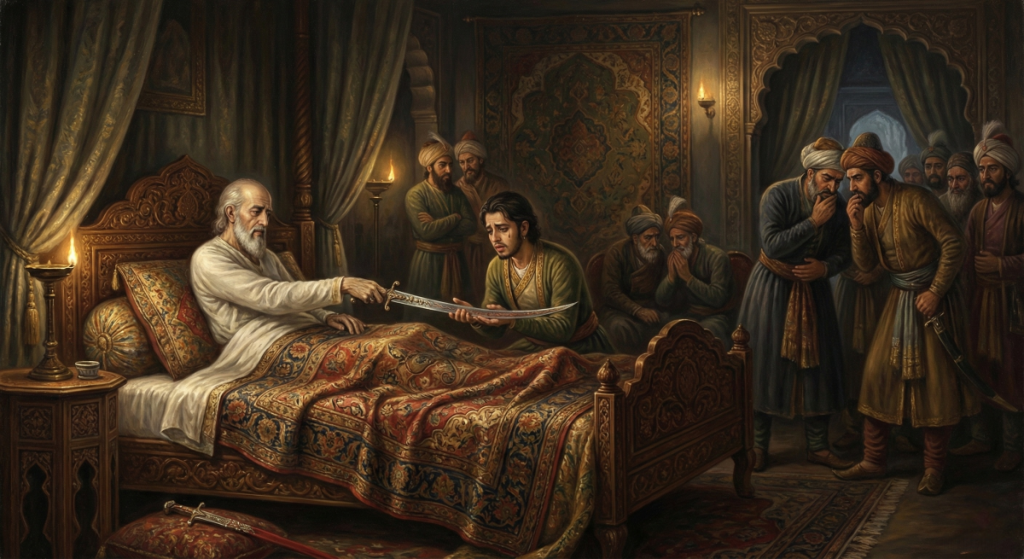
This story is quite romantic, but most likely, this great warrior had ruined his health due to years of heavy drinking.
Four days later, Humayun ascended the throne. However, what he inherited was not a rock-solid kingdom but a powder keg ready to explode at any moment. Afghan nobles led by Sher Shah Suri and his brothers led by Kamran Mirza were either eyeing the throne hungrily or harboring disloyal intentions.
The newly-established Mughal Empire was like a fancy-looking robe that could be torn apart with a single tug. The political tradition of “dividing the territory among sons” in nomadic regimes and the inexperienced ruling skills left Humayun tormented. He was once forced into exile in Persia and nearly died there.
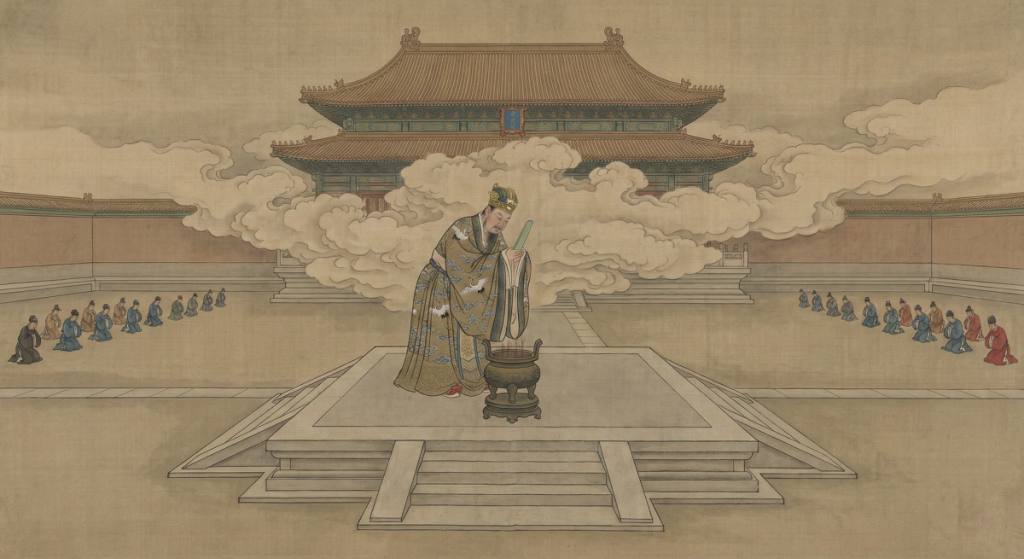
In Beijing, Emperor Jiajing had a much easier time. After purging the opposition, he decreed that sacrifices to Heaven and Earth should be separated. The Temple of Heaven in the southern suburbs was for sacrificing to Heaven, and a new Temple of Earth was to be built in the northern suburbs for sacrificing to Earth. Moreover, this devout Taoist emperor incorporated a large number of Taoist elements into the ceremonies and architecture.
The Temple of Earth was not just a building; it was a declaration of imperial power: I decide how the sacrifices are to be conducted. This move made the emperor the sole link between Heaven and Earth, pushing the civil officials to the sidelines. It was like the emperor had pulled a power-play card and reshuffled the deck, leaving the officials with no choice but to step back.
At the same time, across the sea from the Ming Dynasty, in Japan, the emperor was ignored, and the shogunate existed in name only. Local daimyos were engaged in fierce battles.
In the East, which was advancing along the traditional path, neither the Mughal Empire nor the Ming Dynasty noticed the quiet changes taking place on several islands to the south.
In 1530, Portugal ratified the Treaty of Zaragoza. On the basis of retaining the Philippines (albeit in an awkward position), the Spanish sold the Spice Islands to Portugal for a huge sum of 350,000 ducats. Thus, Portugal completely monopolized the spice trade in the East.
This was like they had drawn a line in the sand in the Pacific Ocean, just as the two Iberian powers had done in 1494 when they signed the Treaty of Tordesillas to divide the Atlantic Ocean. The Earth was thus divided into several parts by these two lines. The globalization of the modern world began with this most brutal division.
However, despite their eagerness to draw lines in the oceans, in their own backyard, the Mediterranean Sea, it was the domain of the Ottoman Empire.
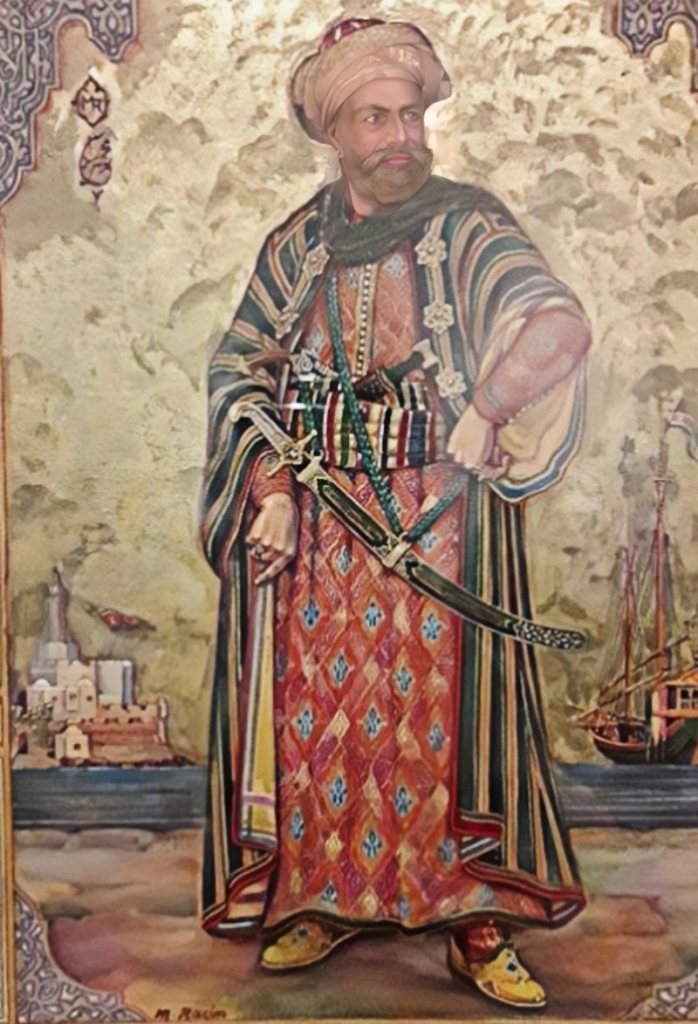
Algiers had just become a province of the Ottoman Empire. Hayreddin Barbarossa(“Redbeard”), the pirate chief who dominated the Mediterranean, was appointed admiral by Sultan Suleiman the Magnificent. He suddenly went from being a ” lone wolf operator” to a ” big shot in a trust”.
From then on, this name, which would later often be used to describe a huge operation, gave the newly-appointed Holy Roman Emperor Charles V an even bigger headache. It was like a thorn in his side that just wouldn’t go away.
Epilogue: 1530 as a Global Pivot – The Twilight of Tradition and the Birth of Modernity
“No single year can change the world on its own. But 1530 was like a crack.”
- It was the last time a pope crowned an emperor, marking the final curtain call on a long-running play that had been enchanting the stage of history.
- It was the rejection of the Confessio Augustana, as if a balloon filled with the hope of religious harmony had been punctured, deflating all those lofty aspirations.
- It was Thomas Wolsey dying, signifying a compass suddenly shifting direction, leading the country onto a new course.
- It was the Inca brothers’ civil war raging while Pizarro’s fleet set sail from the port, like two trains on a collision course, hurtling towards each other with inevitable disaster looming.
- It was Babur’s death and Humayun’s ascension, representing a baton being passed in a relay race, but on a track filled with obstacles.
- It was Emperor Jiajing separating the sacrifices to Heaven and Earth, symbolizing the refinement of imperial autocracy in the Ming Dynasty.
- It was Copernicus’ manuscript quietly spreading, like the stillness before a storm, where the air is thick with anticipation and the world is on the verge of a huge upheaval.
Through this crack, the old light leaked out completely, and the new light seeped in. Events in every corner of the globe seemed unrelated, yet they shared the same rhythm: