In 1492, Columbus figuratively kicked open the door to the New World. By 1525, while gold and spices poured out from behind that door, guns, cannons, and plagues also emerged. Moreover, it ignited the wildfires of rebellion and new ideas.
In this year, the order of the Old World crumbled amidst the flames of war and the scent of ink, while the contours of the New World took shape in the midst of killing and greed.
Age of Discovery
Four years ago, when the Ottoman Empire captured Belgrade, it failed to unite the Christian countries in Europe.
Three years ago, the Ottoman Empire’s conquest and elimination of the Knights Hospitaller didn’t rouse the Christian countries in Europe either.
Instead, a new round of long – term melee was heating up.
The House of Habsburg, centered around Austria, the Low Countries, and Spain, geographically encircled their long-standing enemy, the House of Valois in France. Meanwhile, they recruited Italian allies, German princes, and Henry VIII of England, in an attempt to further strategically squeeze France’s living space.
Catalogue
Europe’s Dark Dawn
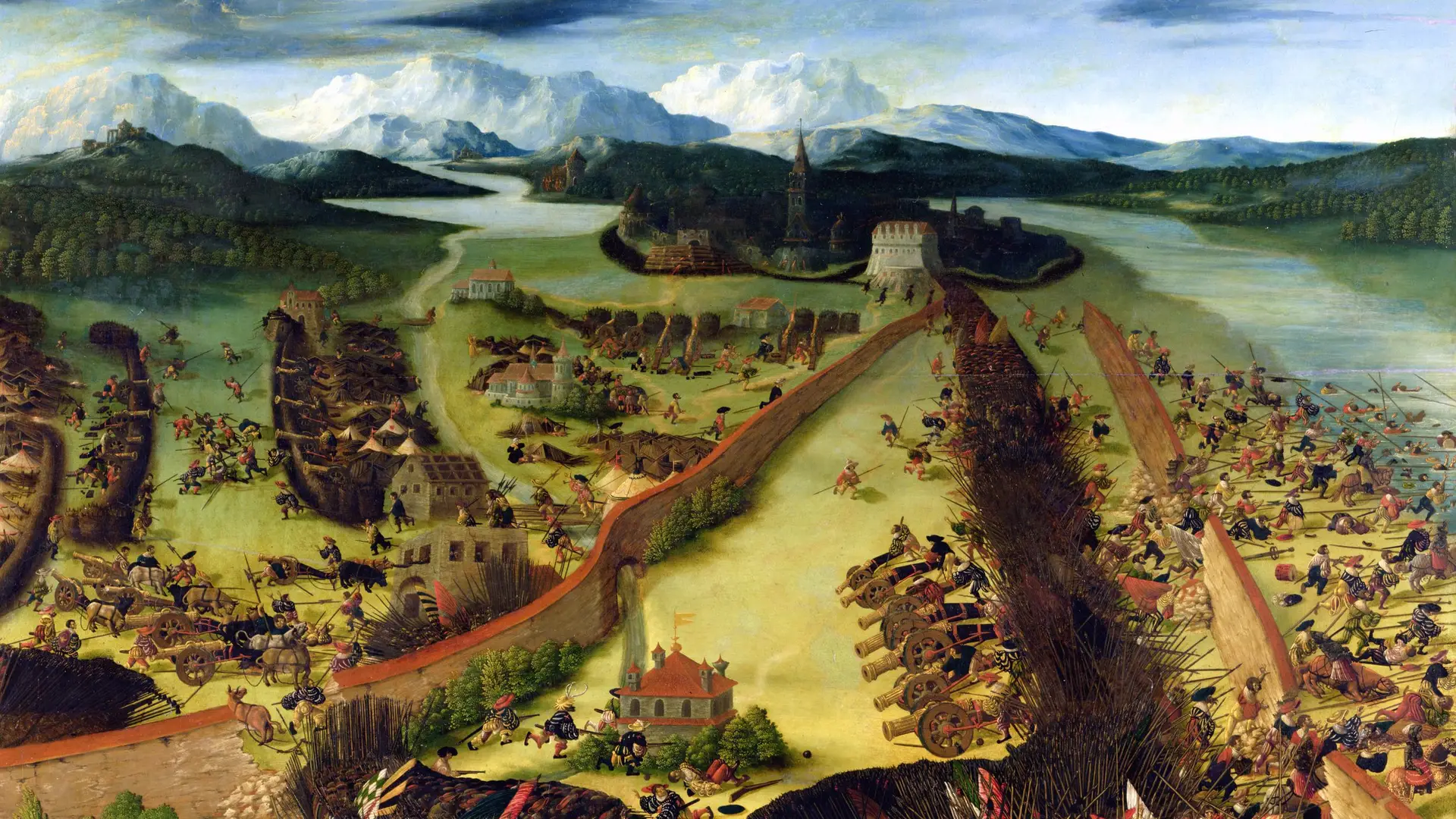
On February 24th, 1525, in Pavia, Italy, there was a thick fog.
King Francis I of France, the young man hailed as the “Knight King”, was leading his 30,000 – strong army composed of the most dazzling and fearsome heavy cavalry and Swiss pikemen with great pride. Opposite him was merely the civilian army organized by Emperor Charles V of the Habsburgs.
However, this group of civilian soldiers, who didn’t play fair, took advantage of the night to break down the walls of the Visconti Park and launched a flank attack on the French army. And Francis I, no longer calm, was eager to completely defeat these so – called “common folks” in his eyes from the front.

“Charge!” King Francis I pointed his long sword forward, and the heavy cavalry and pikemen started moving like an iron torrent. And then, that was it.
They charged into the muddy depression and right into the death trap carefully set by the Spanish arquebusiers.
“Bang! Bang! Bang!” White smoke rose from among the trees. The expensive plate armors were torn apart like paper in the face of the cheap lead bullets. These haughty noble knights never expected that they would be easily taken down by civilian gunmen who had only been trained for a few months.
The result of the battle was devastating. The French army was almost completely wiped out. Many high-ranking nobles, including the Duke of Burgundy, were killed in action.
Even King Francis I himself became a prisoner of Emperor Charles V. All that was left was his tragic and hollow words, “De toutes choses ne m’est demouré que l’honneur et la vie qui est saulve”, which became the final elegy of chivalry. And the age of knights began to draw to a close in the choking smoke of gunpowder.
| Indicator | Kingdom of France | Imperial/Spanish |
|---|---|---|
| Senior Commander on the Field | Francis I | Charles de Lannoy Pescara |
| Troop Composition | Heavy Cavalry, Swiss Pikemen Artillery | Spanish Arquebusiers German Landsknechts |
| Total Troop Strength (Estimated) | ~28,000 | ~23,000 |
| Tactical Characteristics | Traditional Cavalry Charge Reliance on Heavy Cannons | Combined Arms, Infantry Square Arquebusier Skirmishes |
| Casualties | ~10,000 killed; King captured | ~500–1,500 killed |
| Historical Significance | House of Valois Forces Withdraw From Italy | Established Habsburg Dynasty’s Hegemony in Europe |
While kings were vying for territory in Italy, in the heart of the Holy Roman Empire, the Reformation reached its final climax.
In March 1525, German peasants gathered in Memmingen. They put Martin Luther’s “Sola Scriptura” theory into practice, giving rise to “The Twelve Articles” which justified human rights through theology.
Shouting, “Christ redeemed all with his blood, so we are free!” they demanded the abolition of serfdom, the restoration of forests, rivers, and pastures seized by the nobles, and the right to elect their own priests. It was very much like an early socialist program.
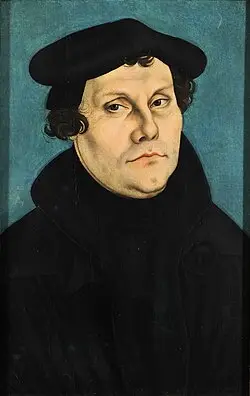
In April, under the unremitting efforts of Martin Luther, Albert von Hohenzollern, the Grand Master of the Teutonic Order, officially converted to Lutheranism. Subsequently, he signed the Treaty of Kraków with the Kingdom of Poland, swearing allegiance to King Sigismund I the Old of Poland, who was his uncle.
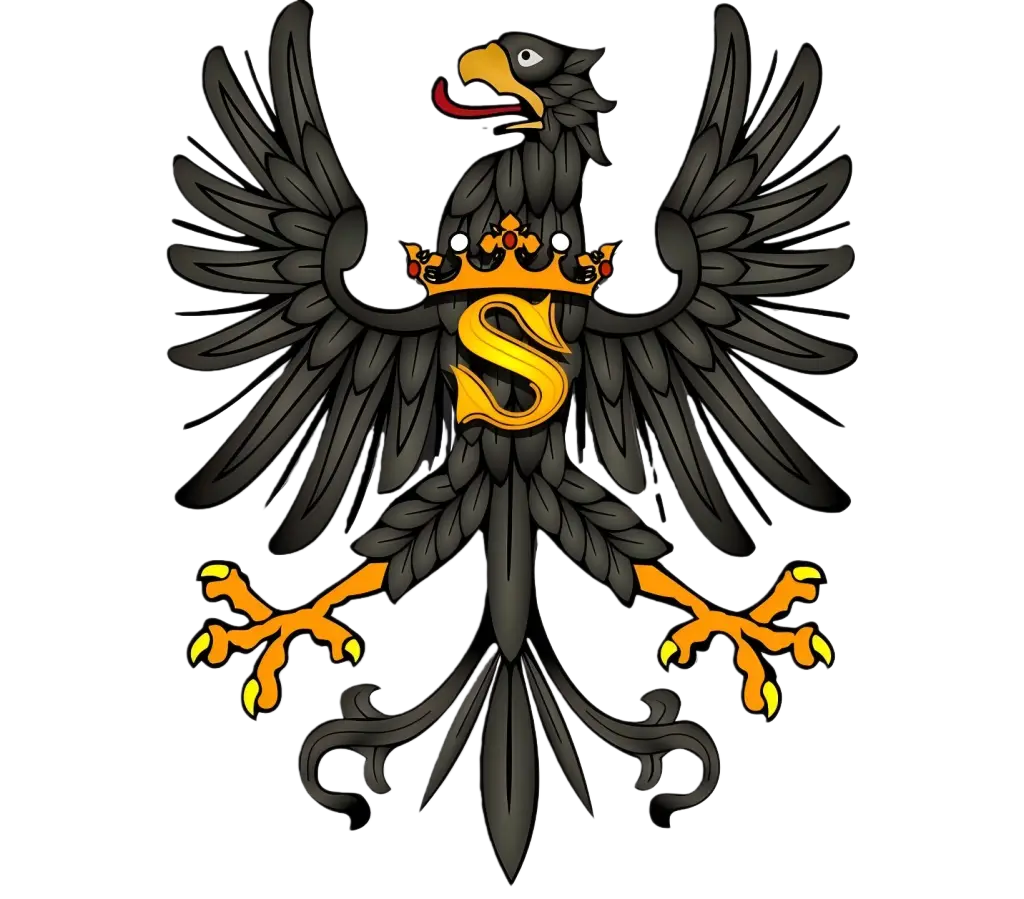
This ended the war between the Teutonic Order and Poland. Albert was granted the title of duke. He made Königsberg the capital, defied the Roman Catholic Church and the Holy Roman Empire, and gradually transformed the territory of the Teutonic Order into a Protestant secularized state – the Duchy of Prussia.
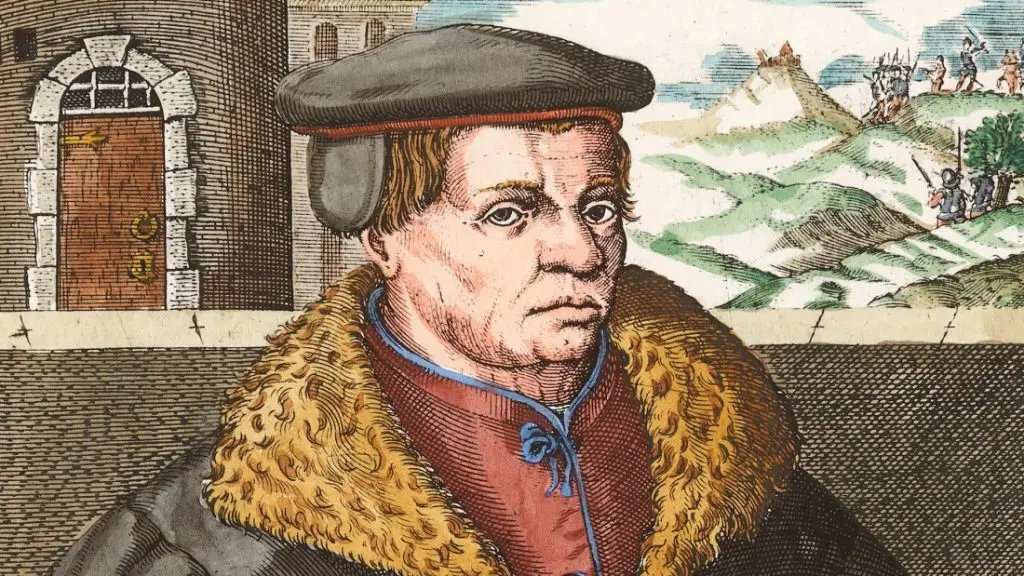
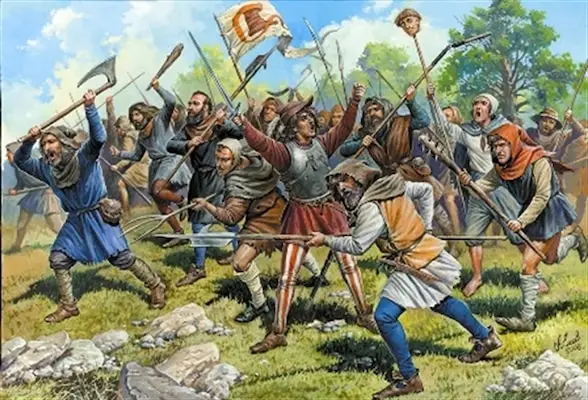
However, the radical priest Thomas Müntzer clearly didn’t think such slow-paced reforms could keep up with the development of society. So, he led the self-enlightened peasants, brandishing the “Sword of Gideon”, and established what they believed to be the true kingdom of heaven in Mühlhausen. They slew those nobles and churchmen who, in their eyes, were “godless” and had turned into demons.
The uprising soon spread throughout southern Germany. But at this point, Martin Luther, the former leader of the Reformation, was stunned. At first, he was excited about the success of his theory. However, soon after Jäcklein Rohrbach led the peasant army to capture Weinsberg and brutally execute Count Ludwig I Helfrich, Luther was filled with fear.
He wrote a pamphlet overnight, Against the Murderous, Thieving Hordes of Peasants, condemned the violence as the devil’s work and called for the aristocrats to put down the rebels like mad dogs. This former standard-bearer of the reform betrayed his followers and handed a butcher’s knife to the old order with his own hands.
On May 15th, 1525, in Frankenhausen, the well-equipped coalition of princes faced off against the rebel army armed with farming tools. The outcome was a foregone conclusion. The peasant army, lacking training and proper equipment, crumbled under the artillery fire and cavalry charges of the princely coalition.
The ground was littered with corpses. Approximately 6,000 people were brutally massacred at a place later known as “Schlachtberg”. Thomas Müntzer was captured, tortured to death, and his head was displayed on a lance.
The vigorous German Peasants’ War ended in failure. During the entire process, around 100,000 people lost their lives. The surviving rebels were disenfranchised, stripped of all rights, and anyone had the right to hunt them down.
The loss of 100,000 people was a huge blow to the Holy Roman Empire. This left the political system of the Holy Roman Empire with no chance of reform thereafter, and it became a battlefield for other powerful countries during the Thirty Years’ War (1618 – 1648).
Of course, a troubled time doesn’t only breed bloodshed but also nurtures hope.
On January 21st, 1525, in an ordinary house in Zurich, Conrad Grebel, Felix Manz, and George Blaurock gathered around a basin of water and splashed water on each other. This wasn’t just horseplay; they were performing “believer’s baptism” on one another. This act marked the birth of the Anabaptist movement.
They rejected infant baptism and advocated that the church should be a community of believers who joined voluntarily, rather than being part of the state apparatus. This was like going against the very heavens, subverting the foundation of Christian countries. The Zurich Council was enraged. Infant baptism was an important step in registering citizens’ identities. If no one was going to have it, what were the church lords supposed to live on!
So, a cruel suppression related to “water” began. The church and the lords angrily declared that anyone who dared to receive “rebaptism” would be drowned. But in the midst of this bloodshed, the seeds of “separation of church and state” and “religious freedom” were quietly sown.

In Nuremberg, Albrecht Dürer, a painter and mathematician, was engrossed in publishing Underweysung der Messung. This was the first German – language geometry book. He used the rational light of the Italian Renaissance to illuminate the chaos of the German-speaking world. Amidst the war-torn era, he attempted to re – establish order with compasses, rulers, and mathematics.
In the printing workshops of Cologne and Worms, William Tyndale was taking great risks. He was translating the New Testament into English so that every baker and blacksmith could read the words of God for themselves instead of relying on the “interpretations” of priests.
At that time, this was an extremely audacious act. Soon, the church launched a surprise attack, and he had no choice but to flee in a hurry, clutching the unfinished printing plates. His translation manuscript later gently loosened the ideological shackles of the English-speaking world, and its language style profoundly influenced later English literature.
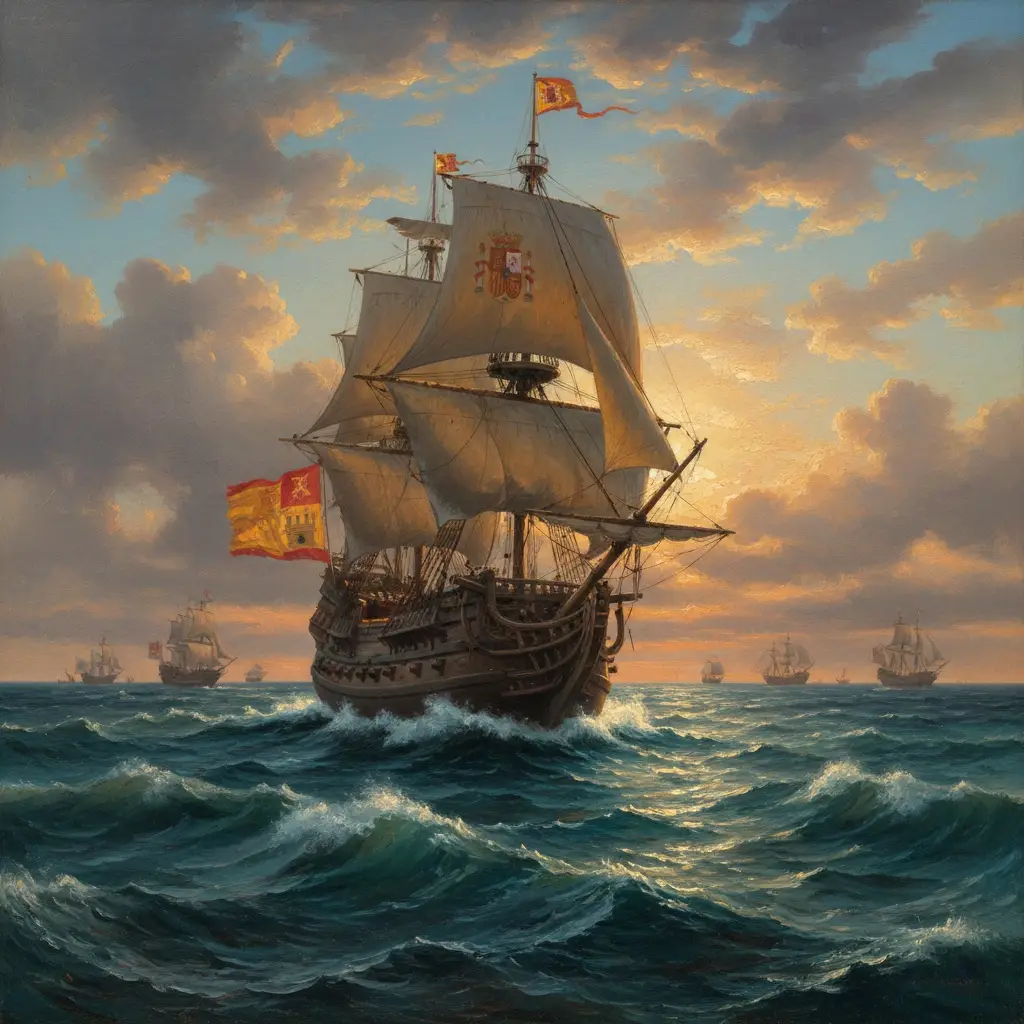
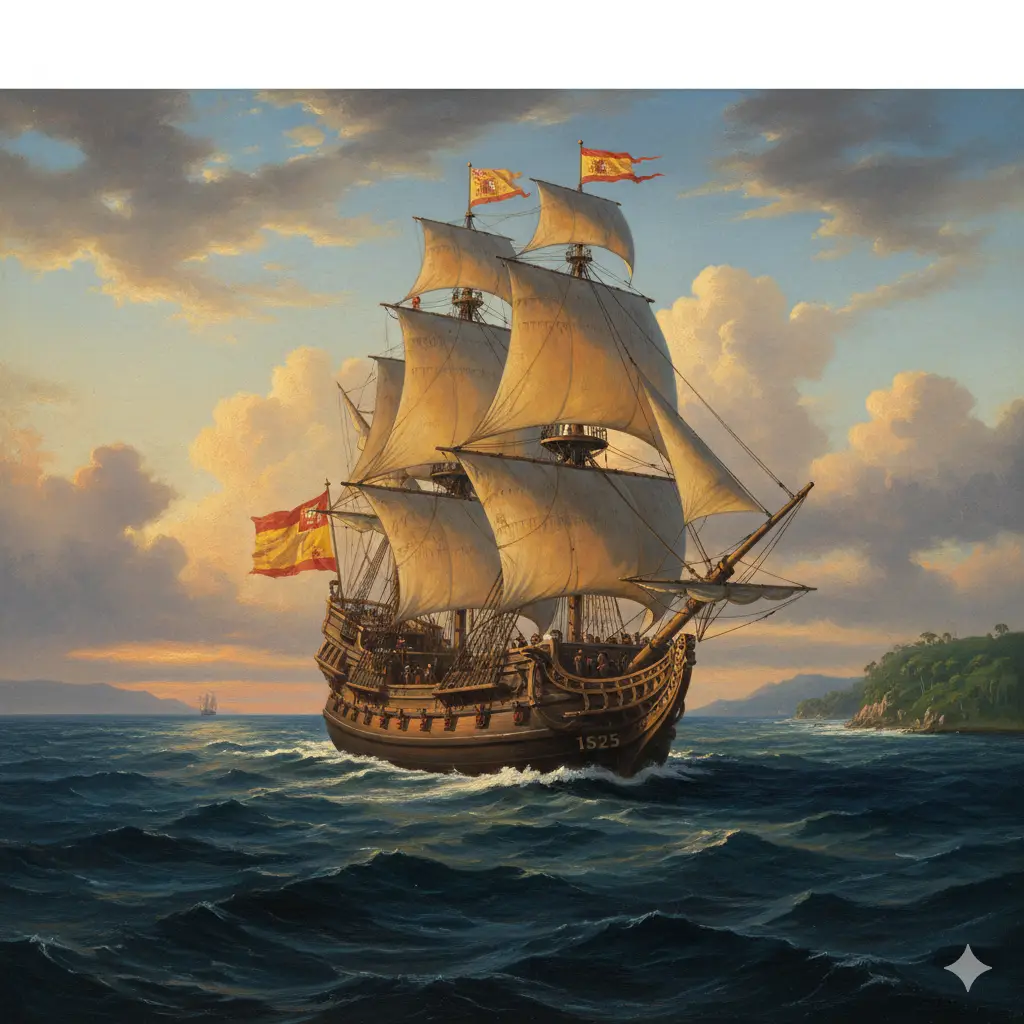
On July 24th, 1525, at the port of La Coruña in Spain, 7 ships and 450 crew members were all set to go. García Jofre de Loaísa, the leader, was full of confidence. Also on board were Juan Sebastián Elcano, who led the fleet to complete the circumnavigation after Magellan’s death, andAndrés de Urdaneta, who would become a future nautical legend. The mission of their voyage was clear-cut: to follow Magellan’s route, traverse that terrifying strait (the Strait of Magellan) once again, and ultimately reach the Spice Islands (the Maluku Islands in Indonesia), seizing this precious land in the East for Spain.
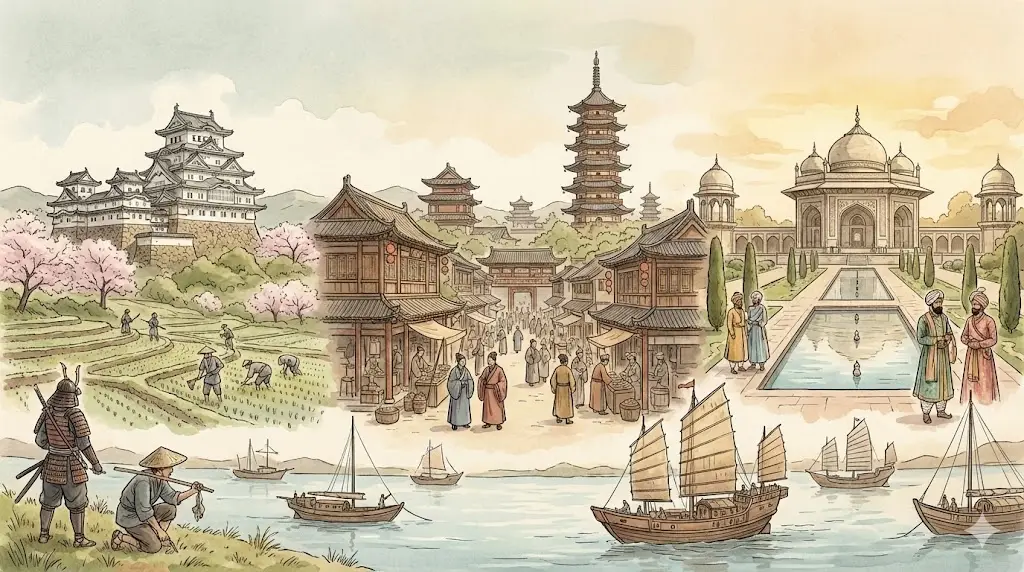
Asia’s Delectable Afternoon Tea
When Europe began its exploration of the New World, in 1525, Asia was leisurely enjoying a delicious afternoon tea.
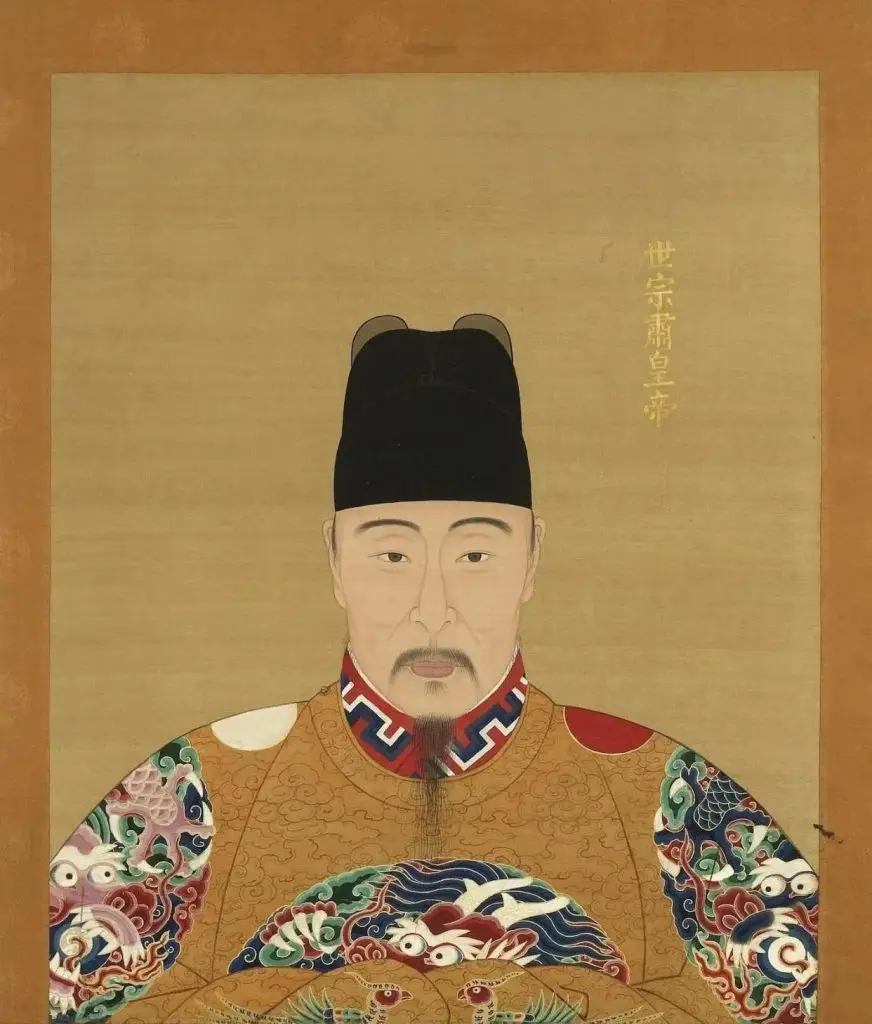
In the Forbidden City of the Ming Dynasty the previous year, the ethical drama of the newly – enthroned Emperor Jiajing debating with his ministers over “Who is my father?” finally came to an end.
This event, known as the “Great Rites Controversy,” led to the arrest of 134 lower officials, among them 16 were executed. 86 senior officials were suspended from their posts, including Yang Tinghe, the Chief Grand Secretary who had initially supported the emperor’s enthronement, who was also forced to resign and return to his hometown.
By purging his opponents, Emperor Jiajing achieved an unprecedented strengthening of his power. However, this also led to the fragmentation of the spirit of the literati-officials in the Ming Empire, sowing the seeds of future factional strife.
Amid the chaos in the imperial court, in the distant city of Shaoxing, Wang Yangming, a great master of Confucianism, founded the Yangming Academy and wrote a paper “Pulling up the Root and Stopping up the Source”, which focused on “The One’s Heart-Mind”.

He claimed that everyone has “innate knowledge” in their heart, just like a dusty mirror. Once polished, it naturally discerns right from wrong. Meanwhile, he advocated “the unity of inner knowledge and action”, admonishing scholars not to merely mouth benevolence and righteousness while being hypocritical inside. He severely criticized the society of that time, which was mired in people’s moral decline and the prevalence of utilitarianism.
While Wang Yangming was further pondering and developing his “The School of Mind,” across the sea in Japan, Emperor Go-Kashiwara might have been the most aggrieved Emperor in the world.
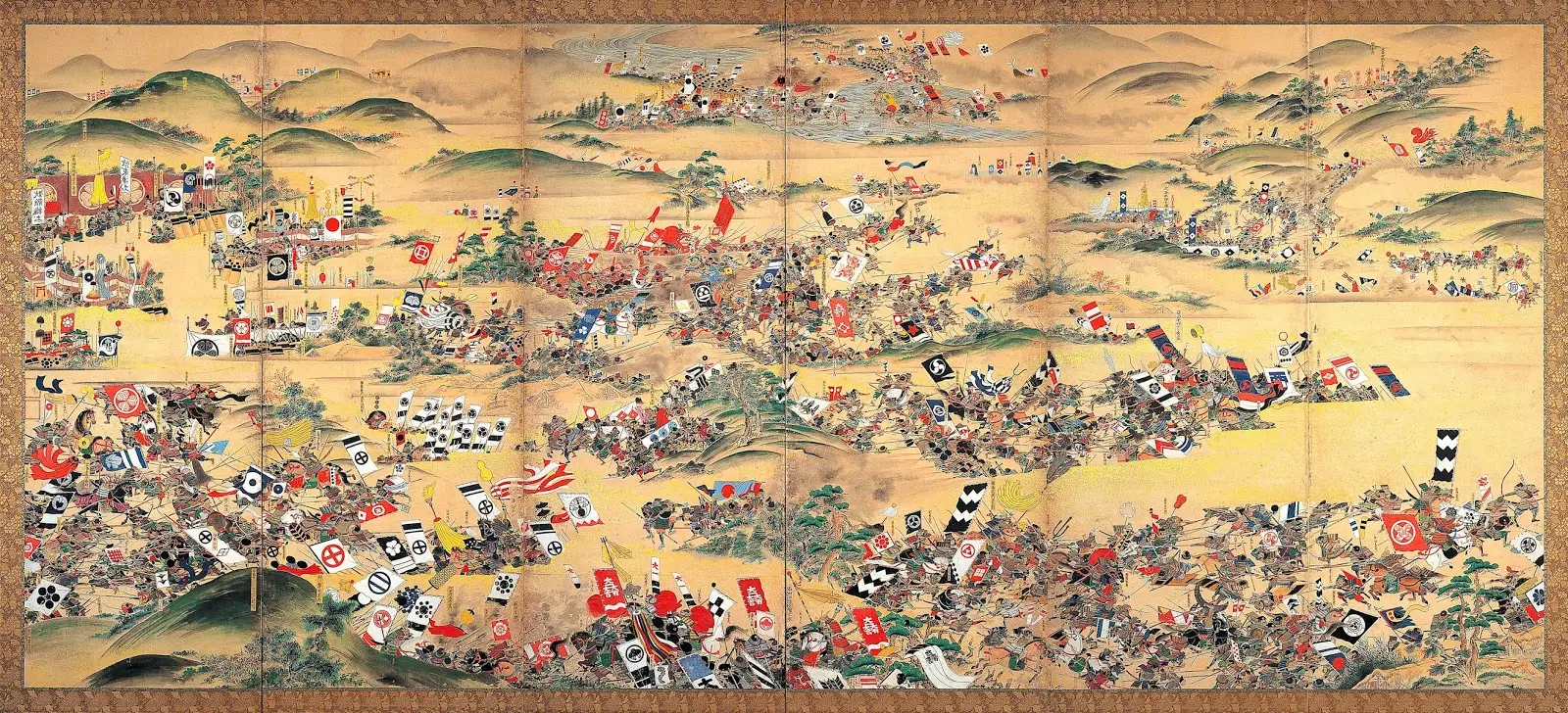
Since his ascension to the throne, this emperor had to postpone his coronation ceremony for 22 years due to lack of funds. The ceremony was finally held four years ago. This year, he even had to suspend the daily rituals because of financial constraints. A year later, the emperor passed away in hunger and cold. His body was left to rot at Sennyuji Temple before being hastily buried.
Ashikaga Yoshiharu, the shogun who was supposed to hold real power, was as withered as an autumn leaf at this time. He was no longer able to control the overall situation, and the authority of the shogunate had completely vanished. At this moment, in a law-of-the-jungle situation, whoever had a sword had the right. The local areas were bustling like wild grass in spring.
Hōjō Ujitsuna, a powerful figure in Sagami Province, captured Edo Castle and used it as a bridgehead for advancing into Musashi Province. In Mikawa Province to the east, Matsudaira Kiyoyasu (the grandfather of Tokugawa Ieyasu) employed various tactics, using both coercion and conciliation to integrate the fragmented local clans in the Mikawa region.
In Kai Province, Takeda Nobutora was “persuading” local lords with force, giving them an ultimatum: either follow him or face death. It was at this time that his second son, Takeda Nobushige, was born.
This man, later hailed as a “true samurai”, would become the most trusted right – hand man and the strongest support for his elder brother, Takeda Shingen. In the turbulent times, blood ties were both the most unreliable and the most reliable bonds.
In 1525, Japan witnessed no nationwide wars. Instead, numerous local warlords were quietly amassing power, waiting for the emergence of the next “Tenka-bito”. Meanwhile, thousands of kilometers away in Kabul was brewing storms of war.
In the winter of that year, Babur, a powerful figure descended from Timur, gazed at the surging waters of the Indus River. This was his fifth invasion of India, and he couldn’t help but swear resolutely in his heart: if he couldn’t conquer this place, he would drown himself in this river.
However, this time was slightly different. Before he could cross the river, Daulat Khan Lodi, the governor of Punjab in the Delhi Sultanate, who was dissatisfied with the rule of Sultan Ibrahim Lodi, actually sent a letter inviting him to come quickly and liberate the people suffering in dire straits.
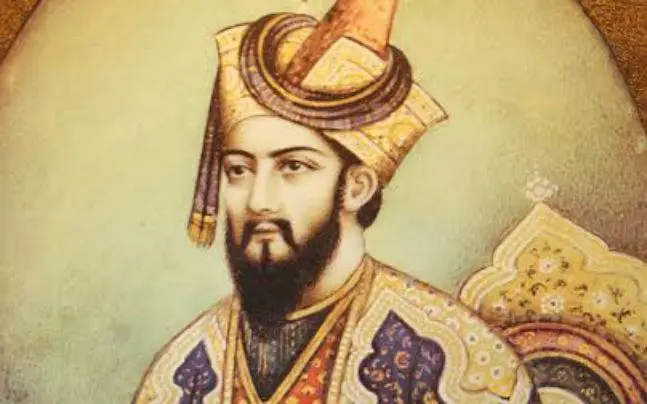
Upon receiving the letter, Babur laughed openly. Then, he led 12,000 elite troops equipped with Ottoman-Turkish cannons and muskets across the Indus River. This was not just a geographical crossing but also a crushing display of the military-technological gap. And thus, the magnificent history of the Mughal Empire was set in motion.
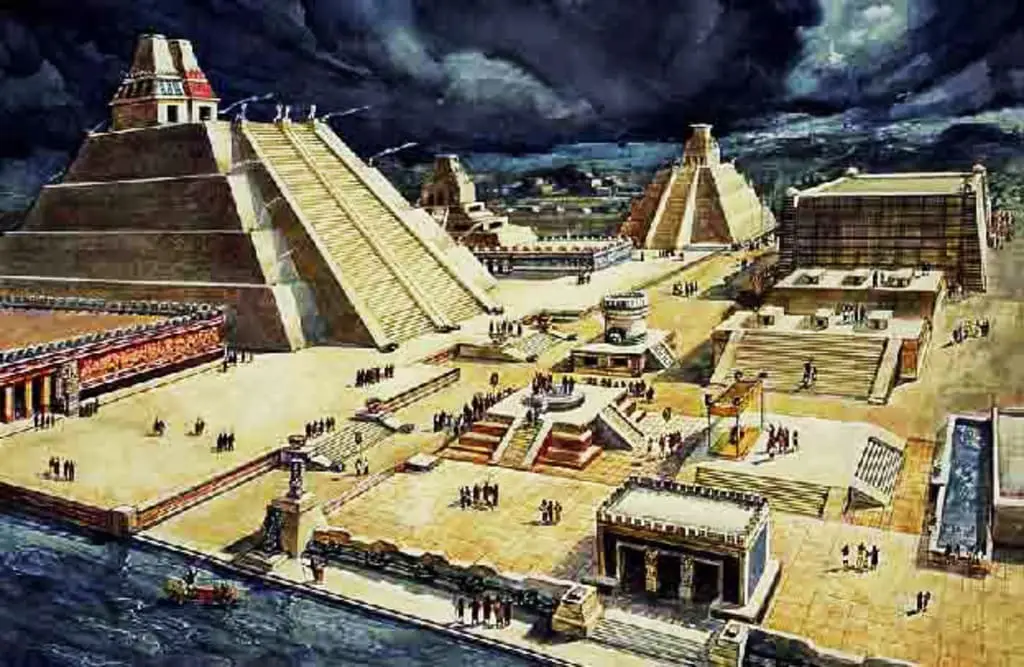
The Americas’ Blood-Red Dusk
While Asia was enjoying afternoon tea, the Americas were greeted by a twilight, yet a twilight tinged with a blood-red hue.
Hernán Cortés, the governor of New Spain, led his army through the Yucatán Peninsula, a region rife with swamps and tropical diseases, in order to quell the rebellion of his subordinate, Cristóbal de Olid. On this expedition, he also took along Cuauhtémoc, the last emperor of the Aztec Empire who had surrendered previously.
On February 28, 1525, when the troops reached the humid rainforest in the Acalan region of Honduras, Cortés claimed that Cuauhtémoc was plotting a rebellion. Even the Spanish war correspondent Bernal Díaz thought this accusation was pure nonsense, but Cortés still put a rough rope around the neck of the last emperor and hanged him from a ceiba tree.
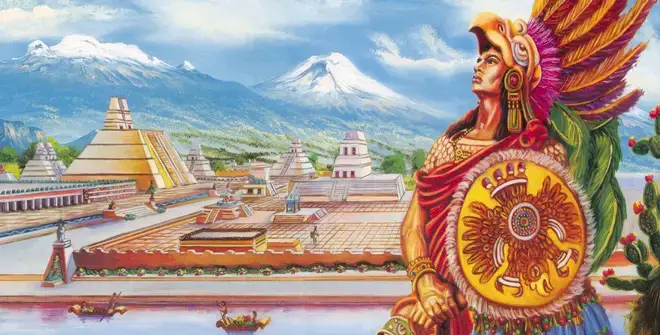
Before the rope tightened, Cuauhtémoc said to Cortés, “I’ve long known your lies. I knew you were going to kill me… God will judge you.”
As the noose fell, the last legitimate symbol that had endured for hundreds of years on the American continent breathed its last. The Aztecs were no longer “conquered subjects” but were reduced to “slaves” of the Spanish colonizers.
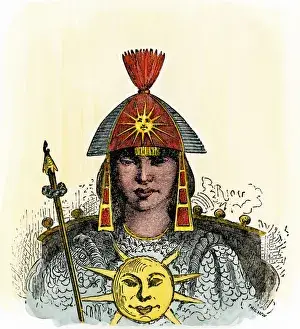
Huayna Capac
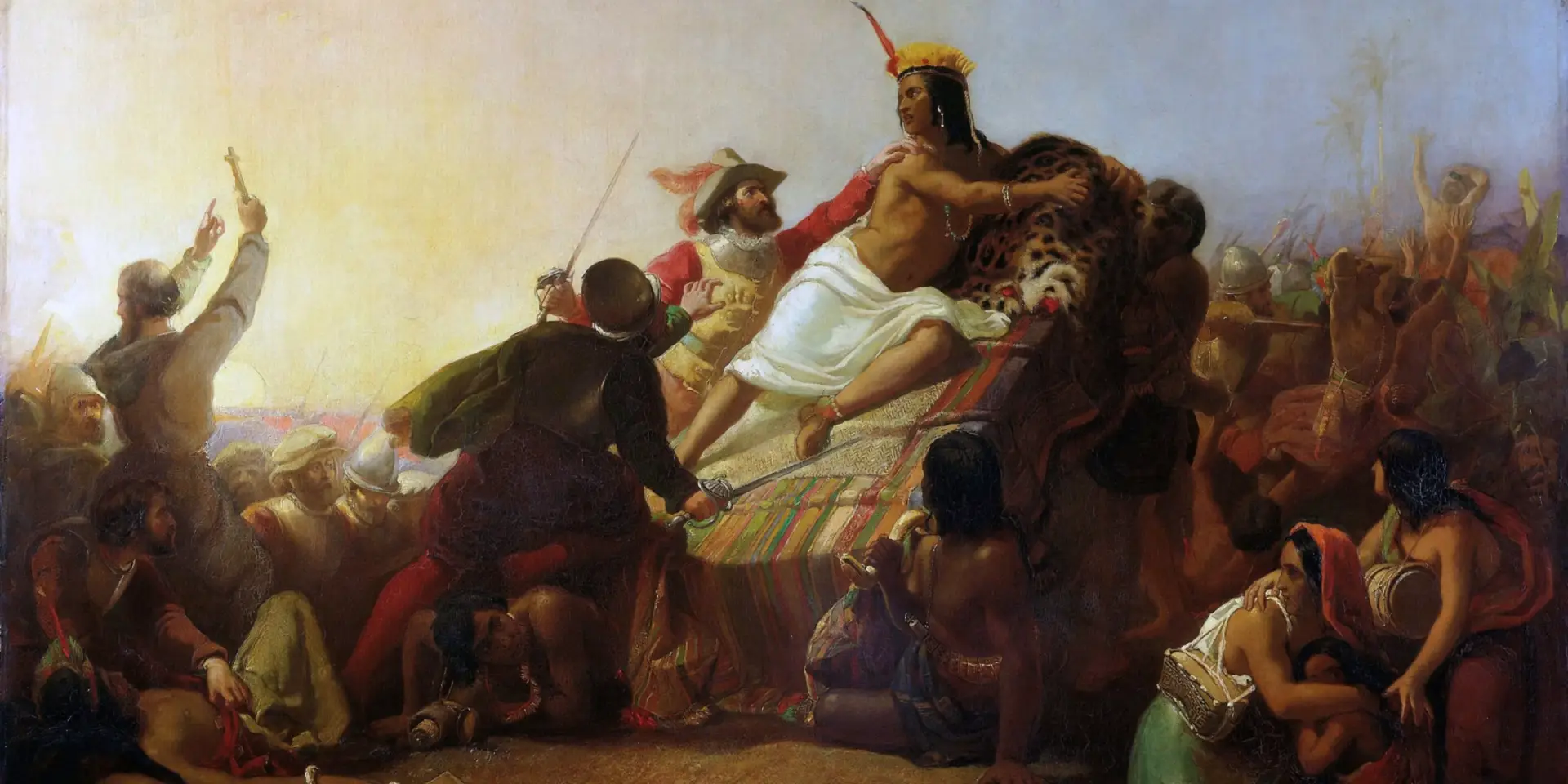
In 1525, the great Inca emperor, Huayna Capac, died of the plague in Quito. His designated heir, Ninan Cuyochi, also succumbed to the plague soon after. The deaths of the emperor and his heir were like the first domino to fall, instantly triggering a civil war. Huayna Capac’s two sons, Huáscar and Atahualpa, engaged in a life or death struggle, and the ancient empire entered its final blood-soaked days.
Meanwhile, in the distant Inca Empire nestled within the Andes Mountains of South America, the land was being ravaged by a plague. Smallpox (or Measles), traveling through the newly – opened Central American trade network, arrived here several years ahead of the Spaniards. This invisible reaper quietly began to claim the lives of the Incas.
At this time, Francisco Pizarro embarked on his first South American expedition. Along the Pacific coast of Colombia, they faced hunger, disease, and fierce resistance from the indigenous people. Even his partner, Diego de Almagro, had one of his eyes shot out by the natives. In the end, they had to abandon the expedition and return to Panama to reorganize. Paradoxically, this failure only strengthened their greed as conquerors.
Africa’s Candlelight in the Dark Night
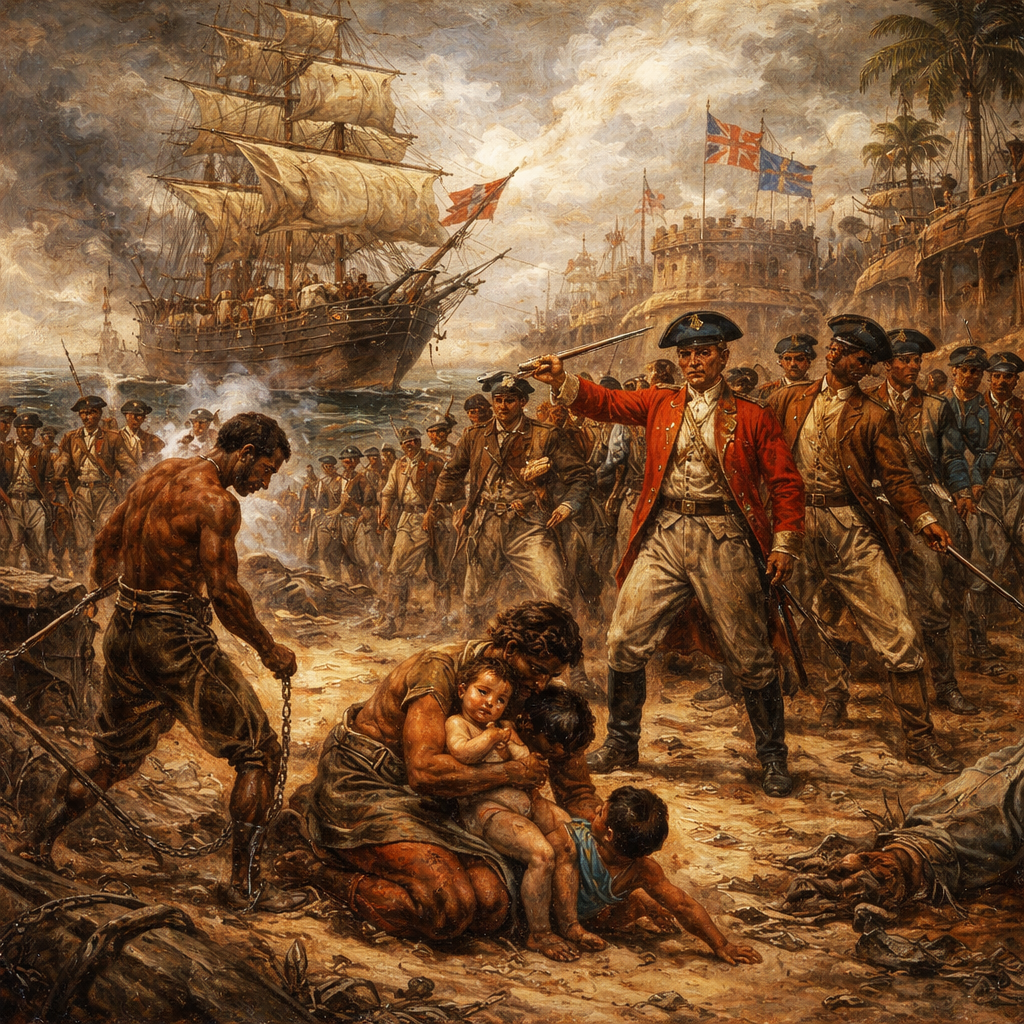
The blood-red twilight in the Americas couldn’t hold back the approach of darkness, just as in the Gulf of Guinea in Africa at this time, the dimly-lit lights on the lighthouse in the night couldn’t stop a cargo ship from leaving the port and sailing into the endless darkness.
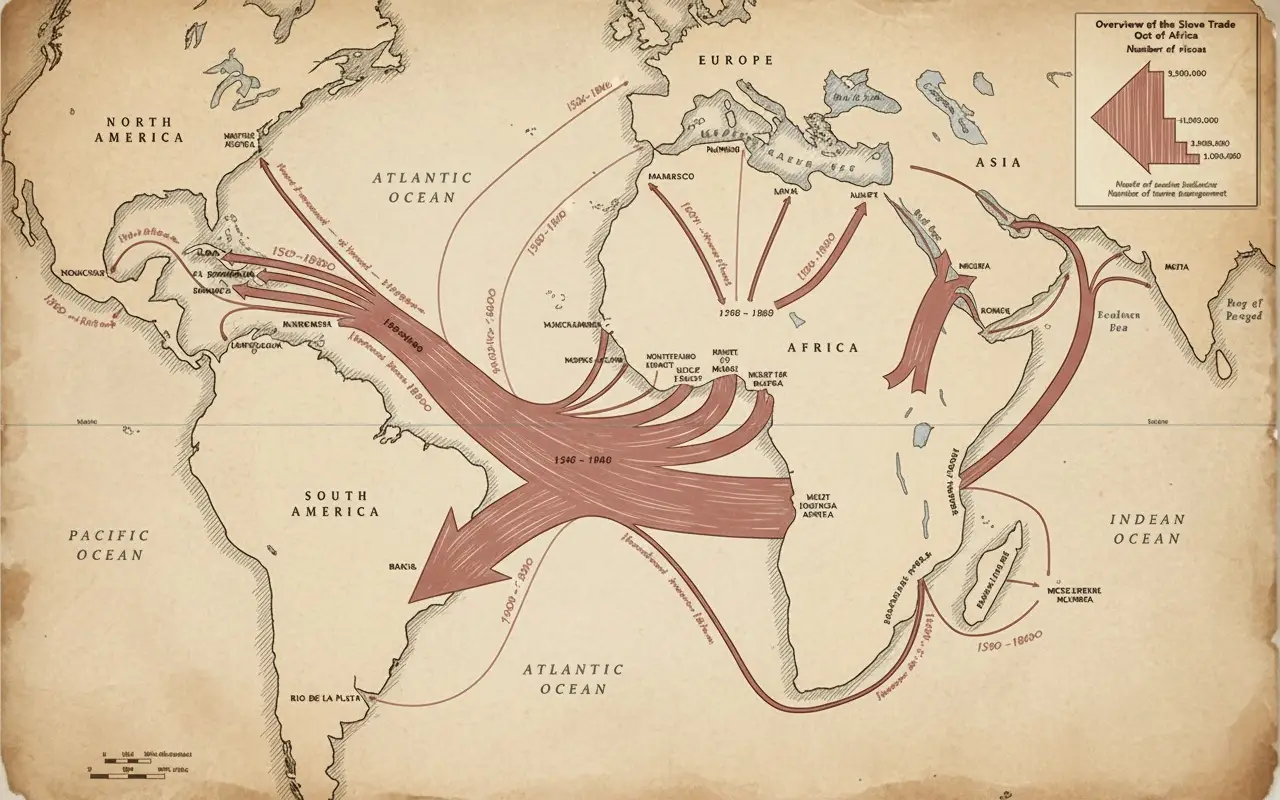
On this ship were two or three hundred African men and women chained up. Since 1502, European fleets had been transporting African blacks to the Americas, usually via a transfer in Europe. But this time, apparently, the slave-traders didn’t want to wait any longer. Instead of going to Europe, they chose to cross the Atlantic Ocean directly to the Caribbean region.
The departure of this ship marked the birth of the most bloody and inhumane “Middle Passage” in the “Triangular trade”. From then on, to make up for the labor shortage caused by the decline of the indigenous people in the Americas, the Europeans “invented” this assembly – line – like system of human plunder. Over the next three and a half centuries, about 12.5 million Africans were cast into this blood-soaked path.
Yet in this same year, the Songhai Empire on the west coast of Africa reached its zenith under the rule of Emperor Askia Muhammad I. He controlled the trade routes of gold and salt that traversed the Sahara, generating an enormous amount of wealth.
It’s capital, Timbuktu, was the academic CBD of the entire Islamic world at that time. Countless scholars engaged in debates here, and thousands of manuscripts circulated. Knowledge was traded and treasured just like gold.
However, in this year, Askia Muhammad I was advanced in age and gradually going blind, while his successor remained undetermined. His sons were secretly vying for power. The huge empire, which was built on trade and military strength, was experiencing internal loosening.

Outside, European explorers were all salivating with envy, spreading the word: the king here used gold to make tableware, and the domes of the palaces shone brightly in the sun.
At the other end of Africa, the powerful Ottoman Empire controlled the routes to Asia. The strong – handed rule of Suleiman the Magnificent not only struck fear into the hearts of European countries but also made the provincial governors under his rule tremble with fear.
Thus, Hain Ahmed Pasha, the governor of Egypt who could no longer bear this kind of oppression, stepped forward. He had expected that once he raised the flag of righteousness, people would follow suit. However, when Suleiman the Magnificent dispatched his most trusted Grand Vizier, Pargalı Ibrahim Pasha, to Egypt, the rebellion came to an end, and he became like a futilely fidgeting monkey.
After quelling the rebellion, Ibrahim Pasha didn’t rush back to claim his reward. Instead, he did something even more remarkable: he engaged in law-making.
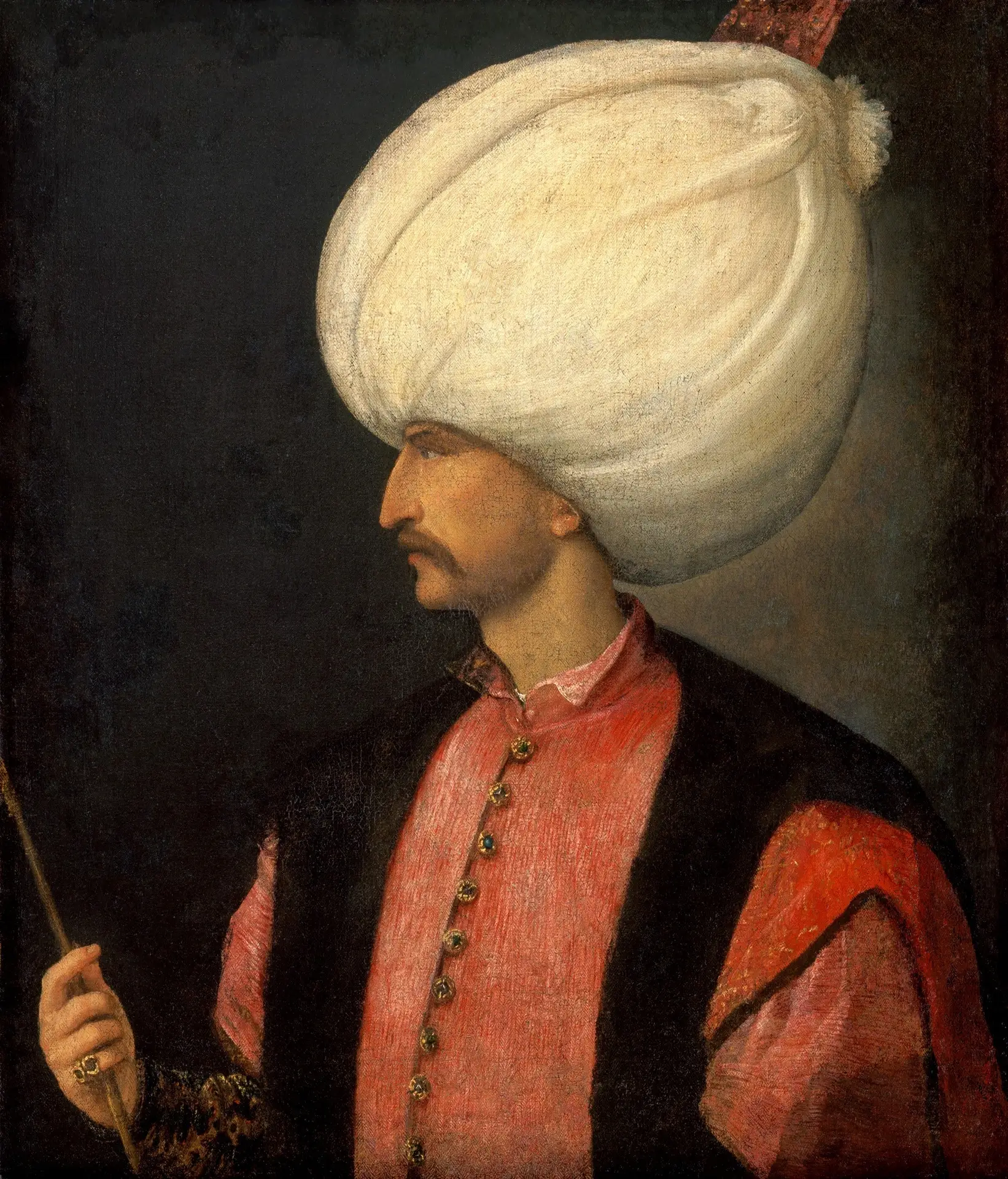
In 1525, he promulgated the ” Kanunname of Egypt “. This was no empty slogan but an extremely detailed “governance manual”. It clearly specified how to levy taxes on land, how to assess officials, and how to adjudicate disputes.
With this single code, he re-locked the unruly Egypt into the efficient bureaucratic machinery of the Ottoman Empire. The effect was immediate. Egypt henceforth became the empire’s most stable granary and treasury, continuously providing support for Suleiman’s subsequent military campaigns in Europe.
This was the modus operandi of a top-tier empire: using institutions to assimilate victories and generate long-lasting profits from conquests. In that year, although there was a riot by the Janissary in Istanbul, King Francis I of France, who had fled back to France, extended an olive branch of alliance.
This re-ignited Suleiman’s ambition to conquer Europe, prompting him to accelerate preparations for the war against Hungary. The following year, Suleiman achieved a great victory at Mohács, causing King Louis II of Hungary and Bohemia to meet a sorry end by drowning.
Epilogue
History is sometimes like a naughty child, fond of throwing several completely different decks of cards onto the table in the same year.
The gunshots in Pavia and Babur’s cannons carried out a “dimensionality-reducing strike” with brute force. In Germany, peasants rebelled with the Bible, and the Anabaptists challenged the regime with a basin of water.
Wang Yangming probed into the conscience with his Philosophy of the Mind. Individual consciousness began to awaken in this year. The Spaniards strangled the Americas with ropes, and the plague they brought massacred the indigenous people, along with the arrival of slave ships filled with African blacks.
This was the year 1525. It was not the starting point, but a turning point. Just like the seven ships that Loaísa set sail with, what they were heading for was not only the spices of the East, but also a globe destined to be integrated.From here, the world started to accelerate towards the familiar era we live in today.
“However, from the very moment of its birth,globalization has been stained with the genes of bloodshed and inequality.”
A Summary of Global Key Events in 1525
| Region | Event | Key Figures | Historical Impact |
|---|---|---|---|
| Europe | Battle of Pavia | Francis I, Charles V | France’s defeat; Habsburg hegemony established; rise of gunpowder warfare tactics |
| Europe | German Peasants’ War | Thomas Müntzer | Radicalization of the Reformation; failure of the grassroots revolution |
| Europe | Prussian Homage | Albert of Prussia | Secularization of the Teutonic Order; birth of Europe’s first Protestant state |
| Europe | Loaísa Expedition Departs | García Jofre de Loaísa, Elcano | Attempt to establish Spain’s trans-Pacific spice route |
| Asia | Completed the writing of Pulling up the Root and Stopping up the Source | Wang Yangming | Maturation of the Philosophy of the Mind |
| Asia | Babur Crosses the Indus River | Babur | Prelude to the Mughal Empire’s founding; Central Asian power expands into South Asia |
| Americas | Execution of Cuauhtémoc | Hernán Cortés, Cuauhtémoc | End of Aztec rule; consolidation of Spanish colonial control in the Americas |
| Americas | Death of Huayna Capac | Huayna Capac | triggers Inca civil war; paves the way for Pizarro |
| Americas | Pizarro’s First South American Expedition | Francisco Pizarro | Lays groundwork for the conquest of the Inca Empire |
| Africa | First Direct Slave Ship Voyage | Unknown | Marks the start of the “Middle Passage” in the Atlantic Triangular Trade |
| Africa | Enactment of the Kanunname of Egypt | IbrahimPasha | Ottoman Empire completes deep administrative integration of Egypt |